

ED: An oldie, originally spied & written up long ago, in the Year of Our Lord 2012, when there were far less combovers, far more sedans, and almost zero crappy EVs. Enjoy. -TK
“Oh yes, we are definitely talking Cordoba!” So said WKRP’s marketing maven on the classic ‘70s/early ‘80s TV show—one of my favorites, along with The Bob Newhart Show. And the Cordoba fit Herb to a ‘T.’ Gaudy, flashy, with its neoclassic grille, ornate badging, myriad color choices, and the famous optional leather seats—or standard velour!
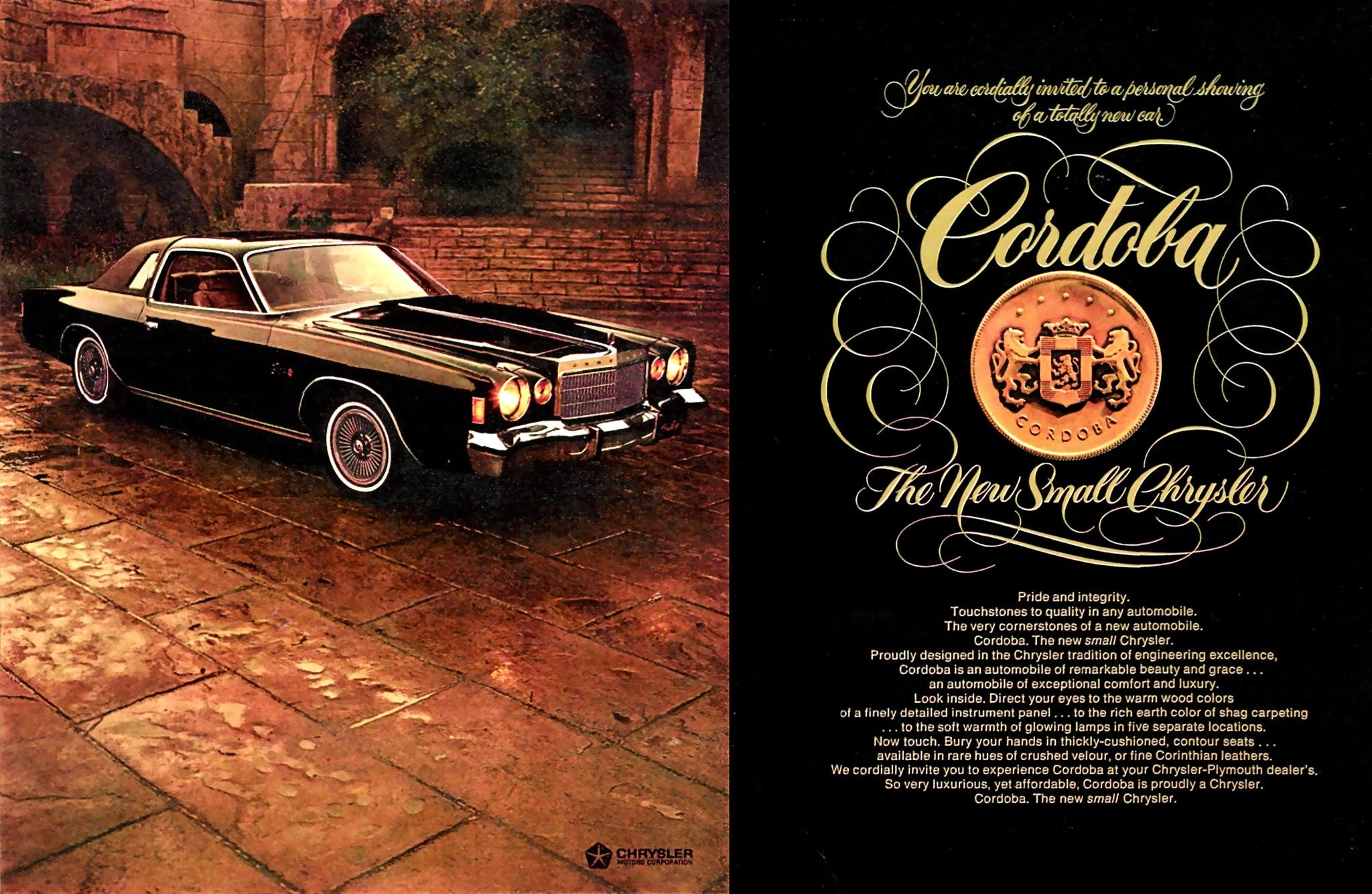
The Cordoba was Chrysler’s answer to the rapidly escalating personal luxury car market. For years, Chrysler Division had a “no small cars” policy and thus the entire lineup was land yachts—BEEG ones! After the muscle car era faded in the early ’70s, thanks to insurance as well as changing tastes, it was largely replaced with PLCs like the Chevy Monte Carlo, Pontiac Grand Prix, and others.
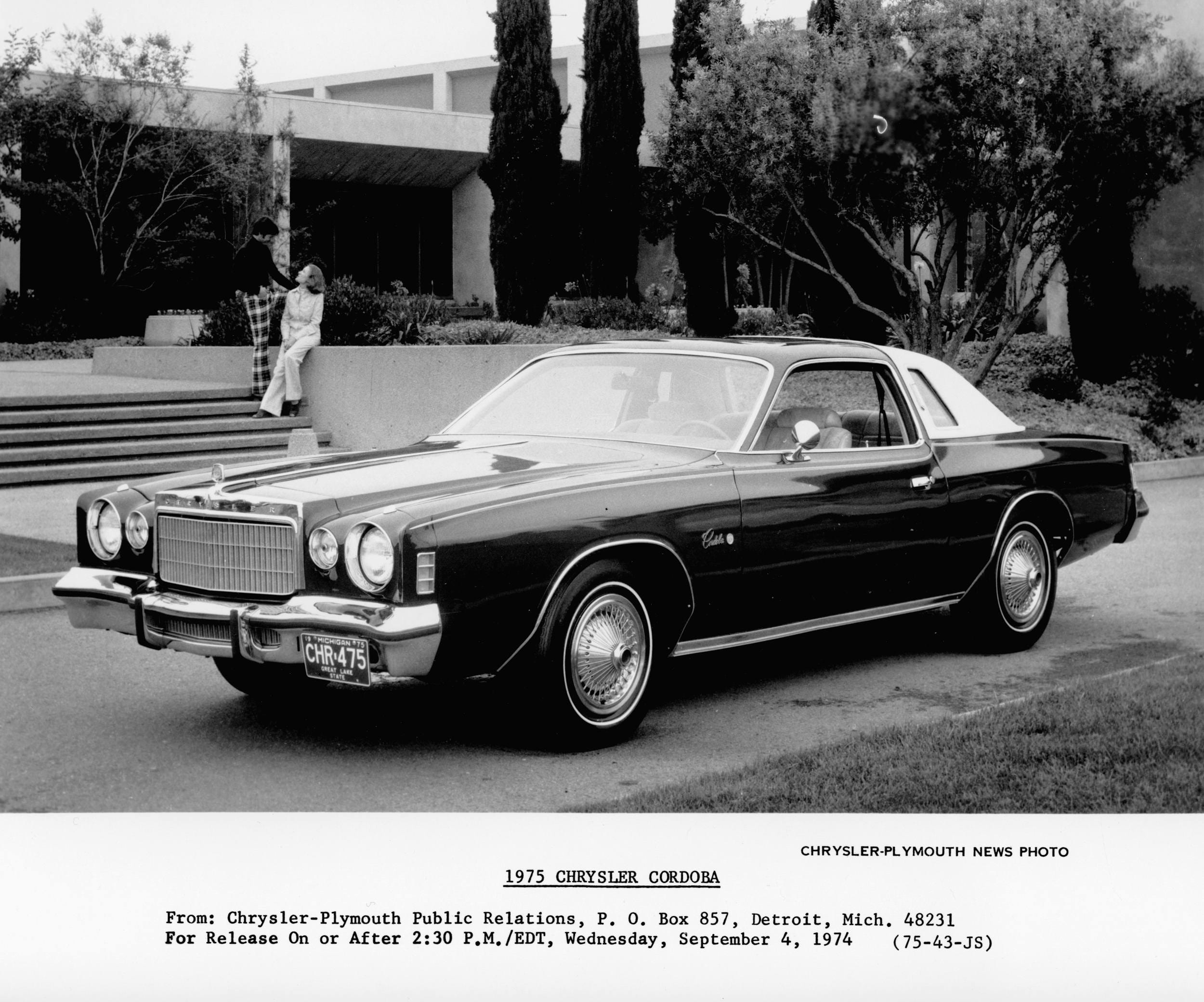
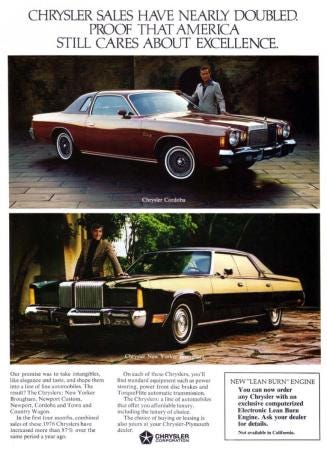
The wild and crazy high schoolers of the ‘60s were getting older, getting married, and having kids, and these personal-lux cars became an exceptionally large part of the new car market. Chrysler did not yet have an entry in this new and profitable market. The 1975 Cordoba, advertised as “the small Chrysler” (relatively speaking, ha ha!), was the answer.
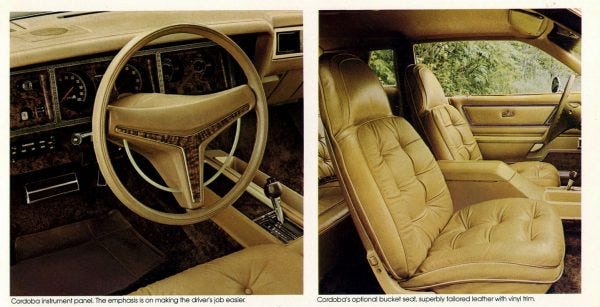
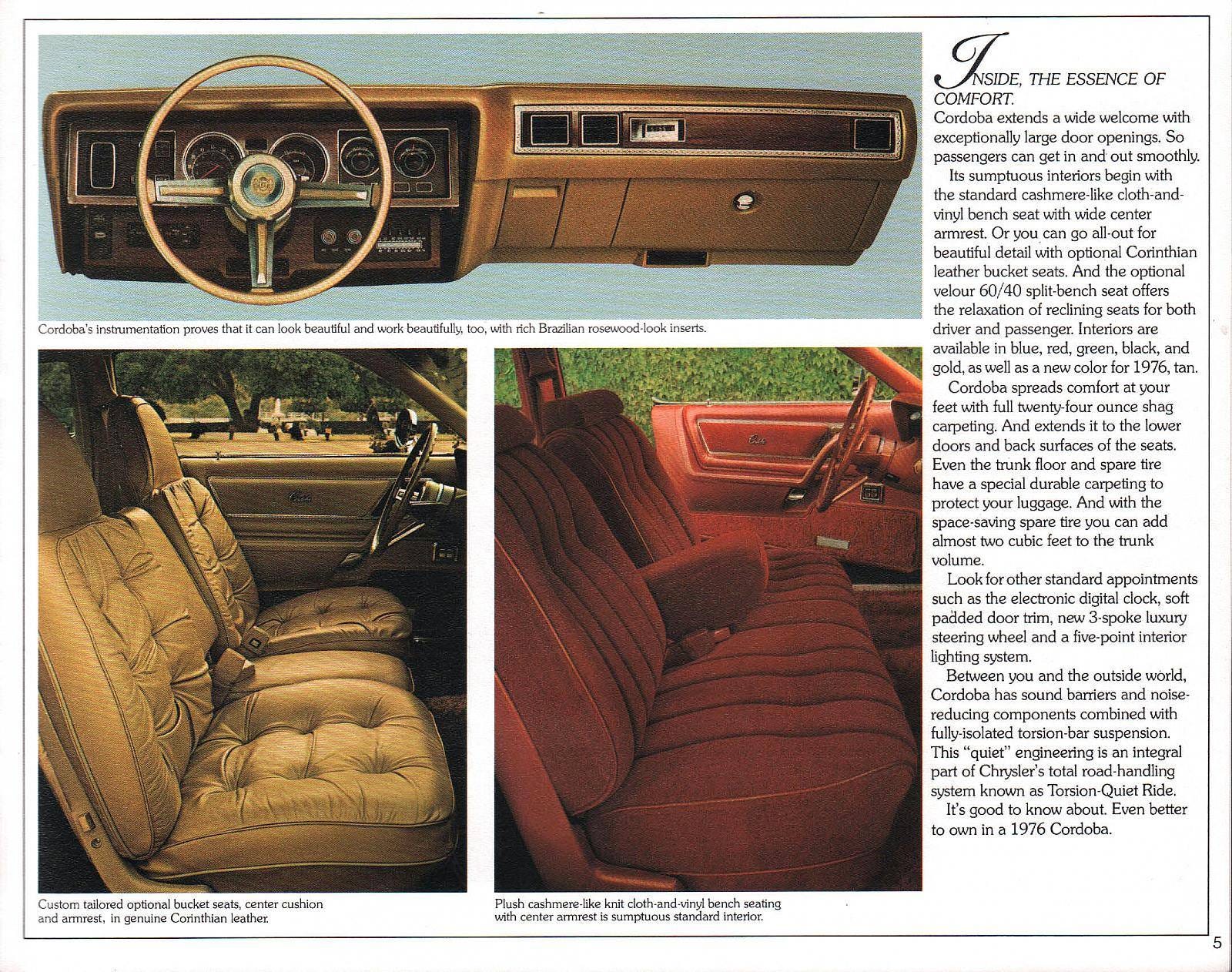
The Cordoba originated as a premium Plymouth coupe, but as it was nearing completion (with its sibling the Dodge Charger SE), marketing decided that it would sell better—and more profitably—as a Chrysler. The ’75 model had all of the mid-1970s Brougham Era cues: shag carpet, power everything, opera lamps, landau top and available wire wheel covers. And let us not forget the soft Corinthian leather! Buckets and a console were also there for the taking.
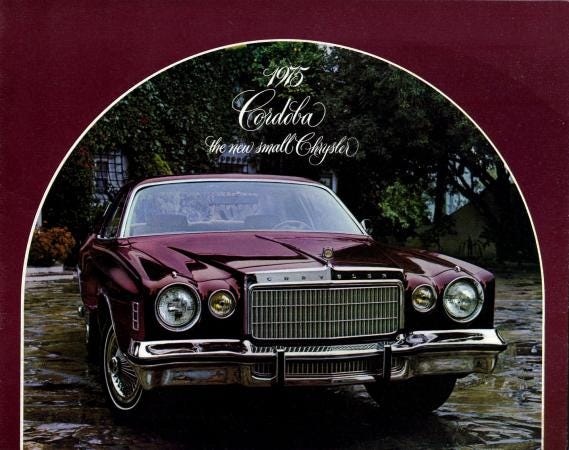
The Cordoba was based on the B-body Plymouth Fury and Dodge Coronet, but had unique sheetmetal, a 114.9 inch wheelbase, and the longest doors in the industry, at 58.5″ long. It also had several “neoclassic” features, the most obvious being the headlamps and parking lamps being set into tunneled pods. While it was meant to recall classic cars of the 1930s, there was more than a passing resemblance to the contemporary Jaguar XJ6 and XJ12 sedans. A two barrel, 150 hp 318 was standard, with Torqueflite automatic transmission. A 400 V8 was available for an extra $73.
While the Dodge Charger Special Edition (the standard Chargers were basically Coronet coupes—totally different sheetmetal) was virtually identical to the $5581 Cordoba, it did not sell near as well. The flossier interiors and snob appeal of the Chrysler led to 150,105 Cordobas vs. 30,812 Charger SEs in their inaugural year, despite a much lower price of $4903. It just wasn’t as Broughamy enough, apparently. Plus, Ricardo Montalban didn’t do any Dodge commercials.
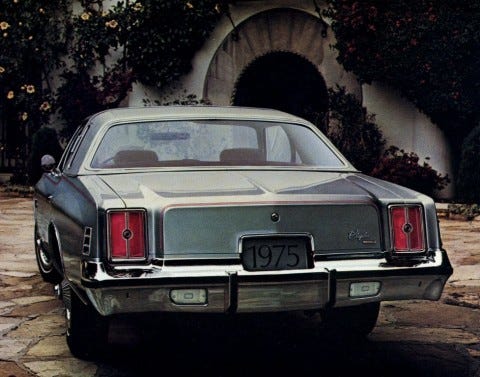
The Cordoba was Chrysler Division’s only bright spot for 1975, as sales of New Yorkers and Newports slid by 12% from 1974. Cordobas made up 60% of total 1975 Chrysler production. It was the right car at the right time.
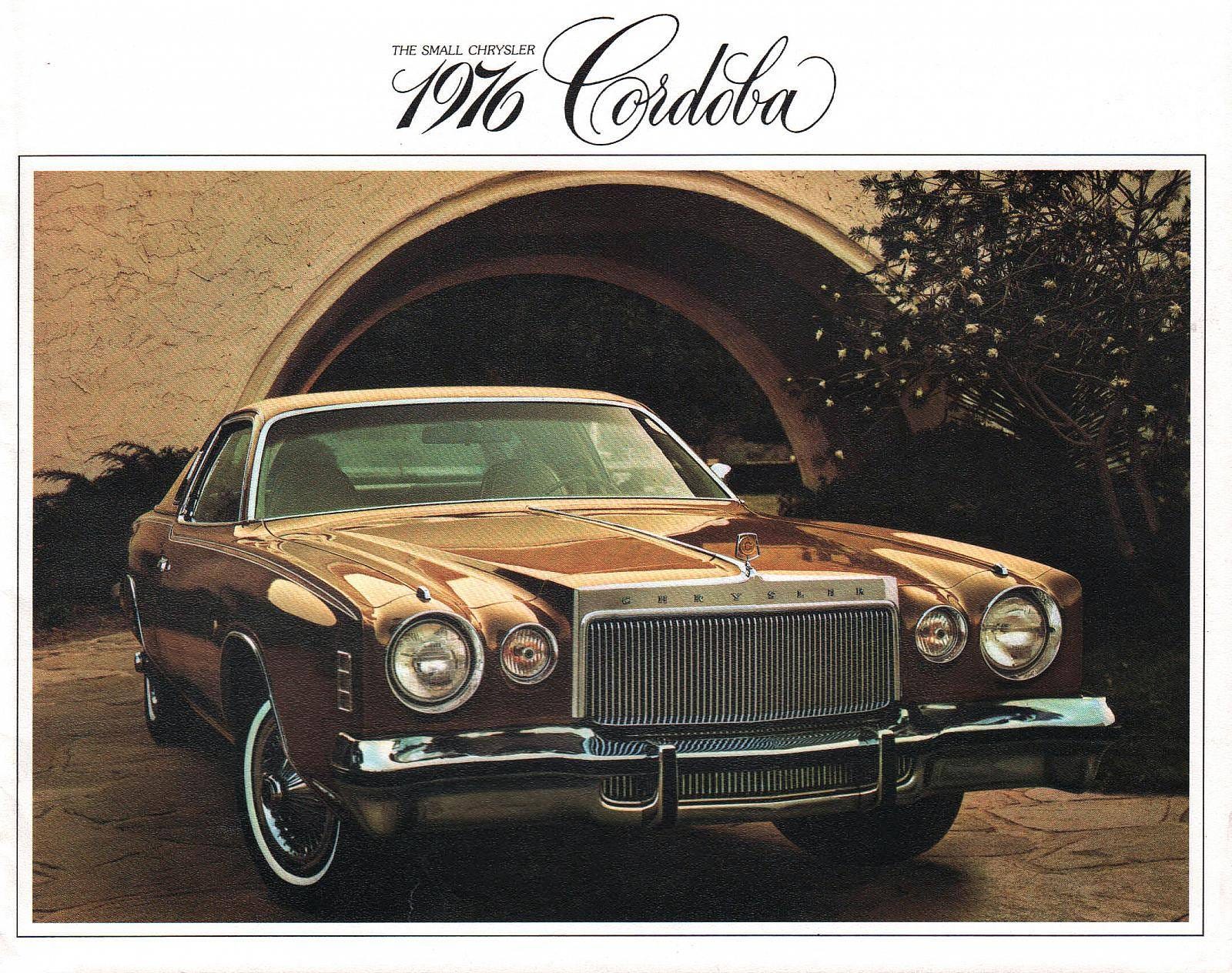
Cordobas were engineered in typical Mopar fashion, with unibody construction and front torsion bar/rear leaf spring suspension. An optional Sure-Grip differential helped keep Cordobas from getting stuck in the snow. Chrysler wisely chose to not mess with success. The 1976 Cordoba was virtually identical, but sported a simple vertical bar grille instead of the ’75’s busier version.
While 1976 sales were not quite as wonderful as 1975’s figure, it was still very good, with over 120,000 sold. It was Chrysler’s hot new product, and very different from the New Yorker Broughams, Town & Countrys and Newports it shared showrooms with.
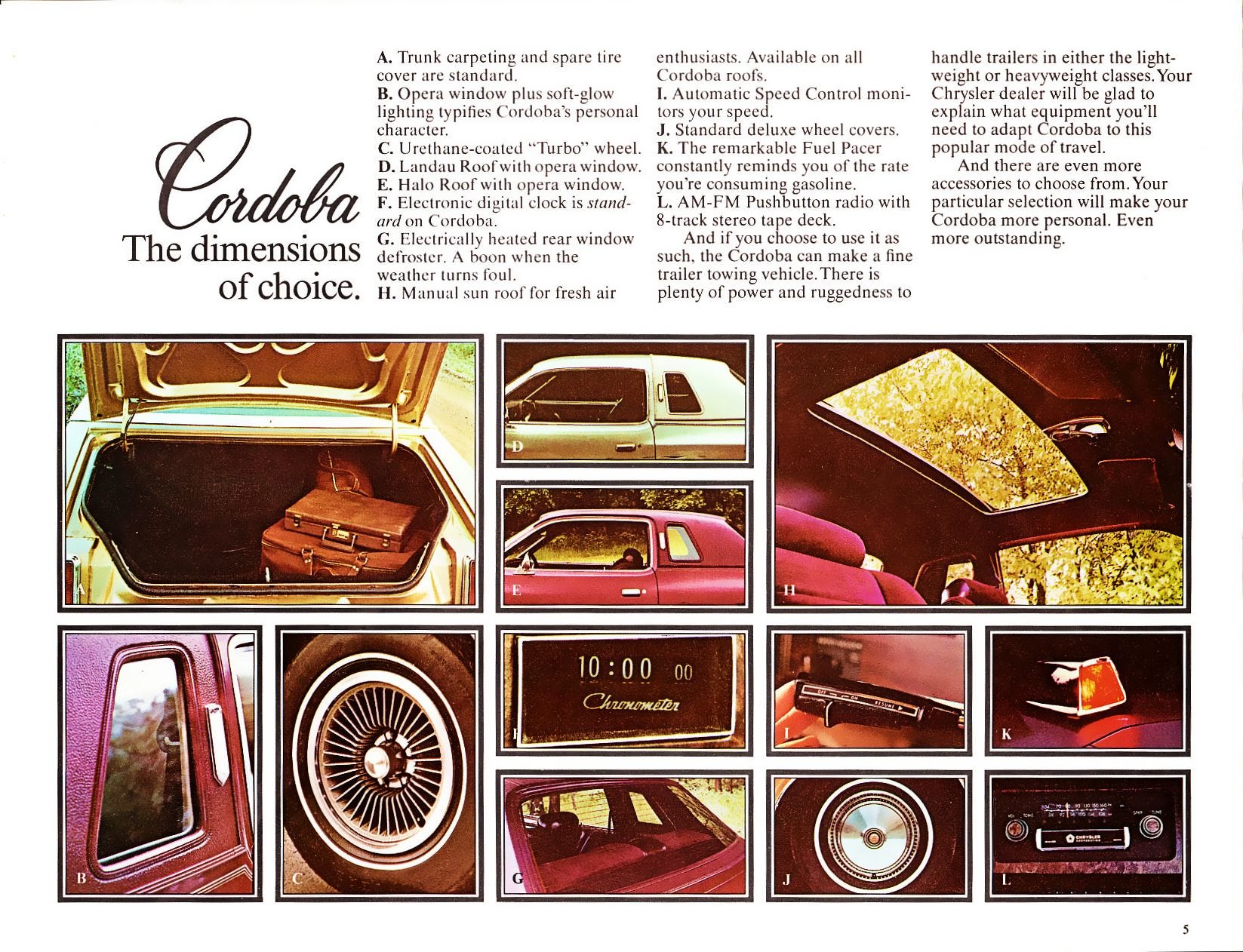
While even the basic Cordoba was very comfortable, there were naturally many, many optional comfort, convenience and appearance options. While all Cordobas came with opera windows and an opera lamp on the B-pillar, a “halo” full vinyl roof or landau roof could be added. I doubt many Cordobas were delivered with the standard steel roof.
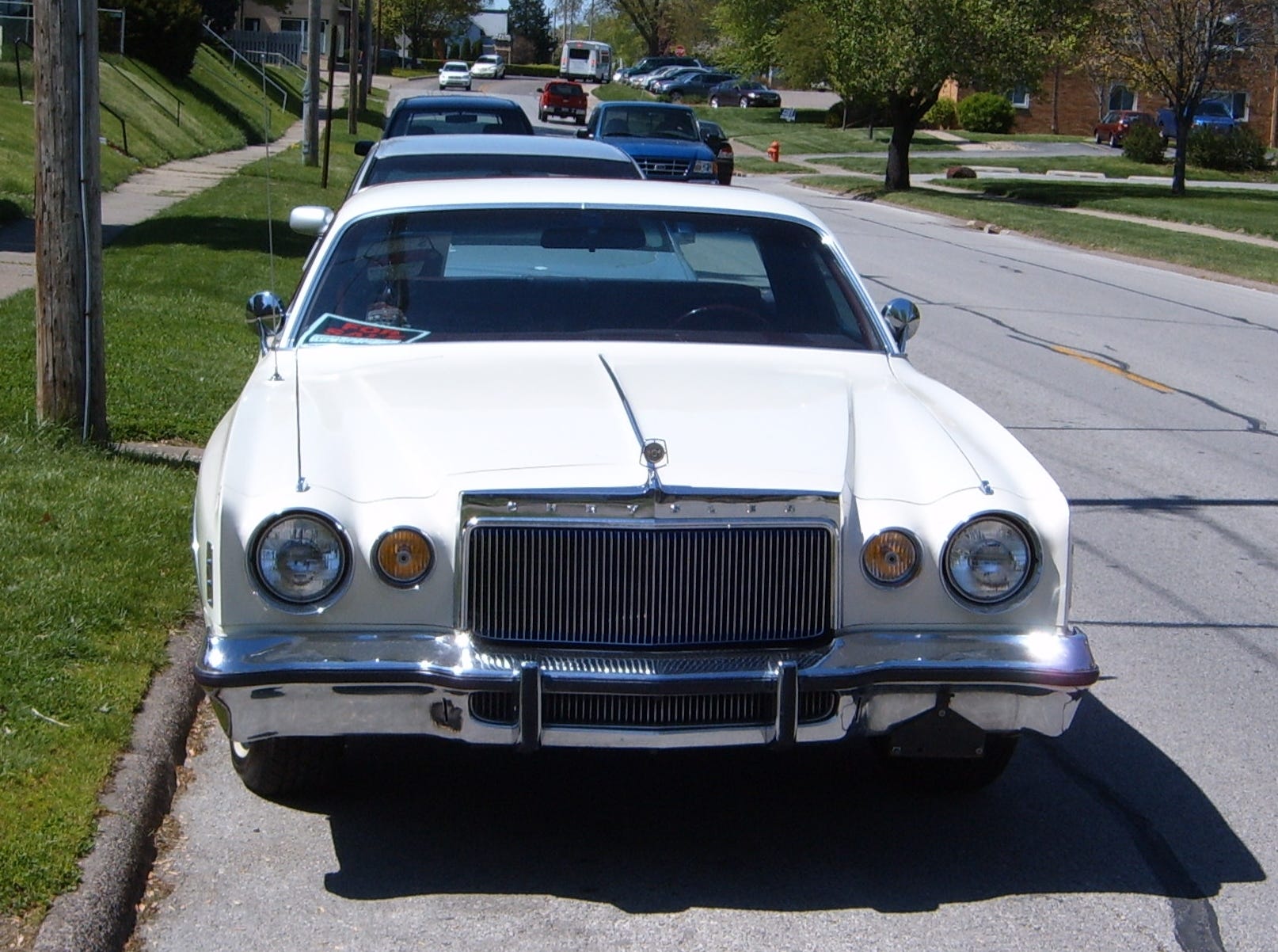
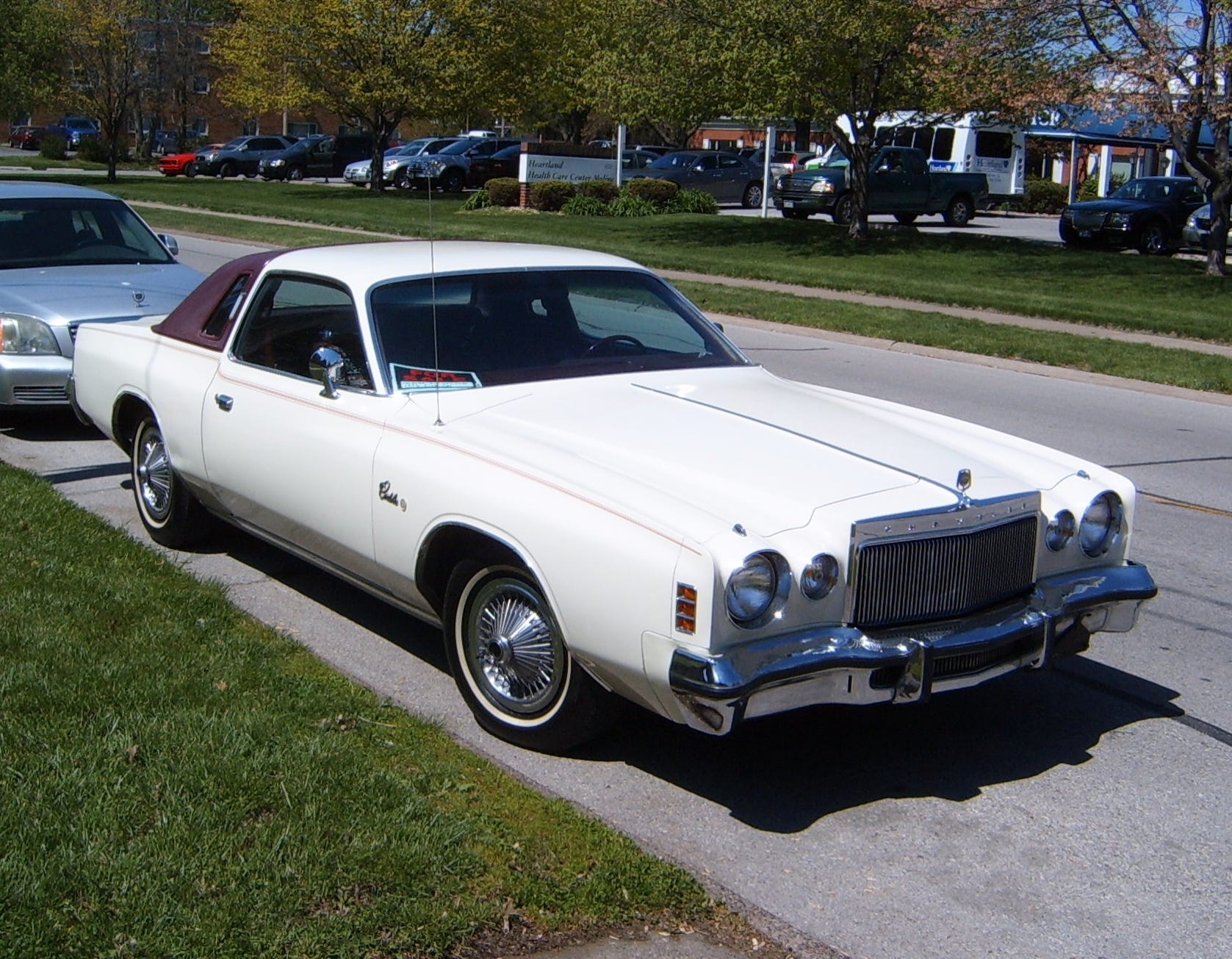
I first spotted our featured Cordoba on Easter way back in 2012, as I was returning home from my parents’ house. It was dark, but I still couldn’t miss it! I hadn’t seen one of these in probably twenty years at that time, so I returned the very next day for pictures. But it was gone! About a week later, I finally saw it again, in the same spot in Moline.
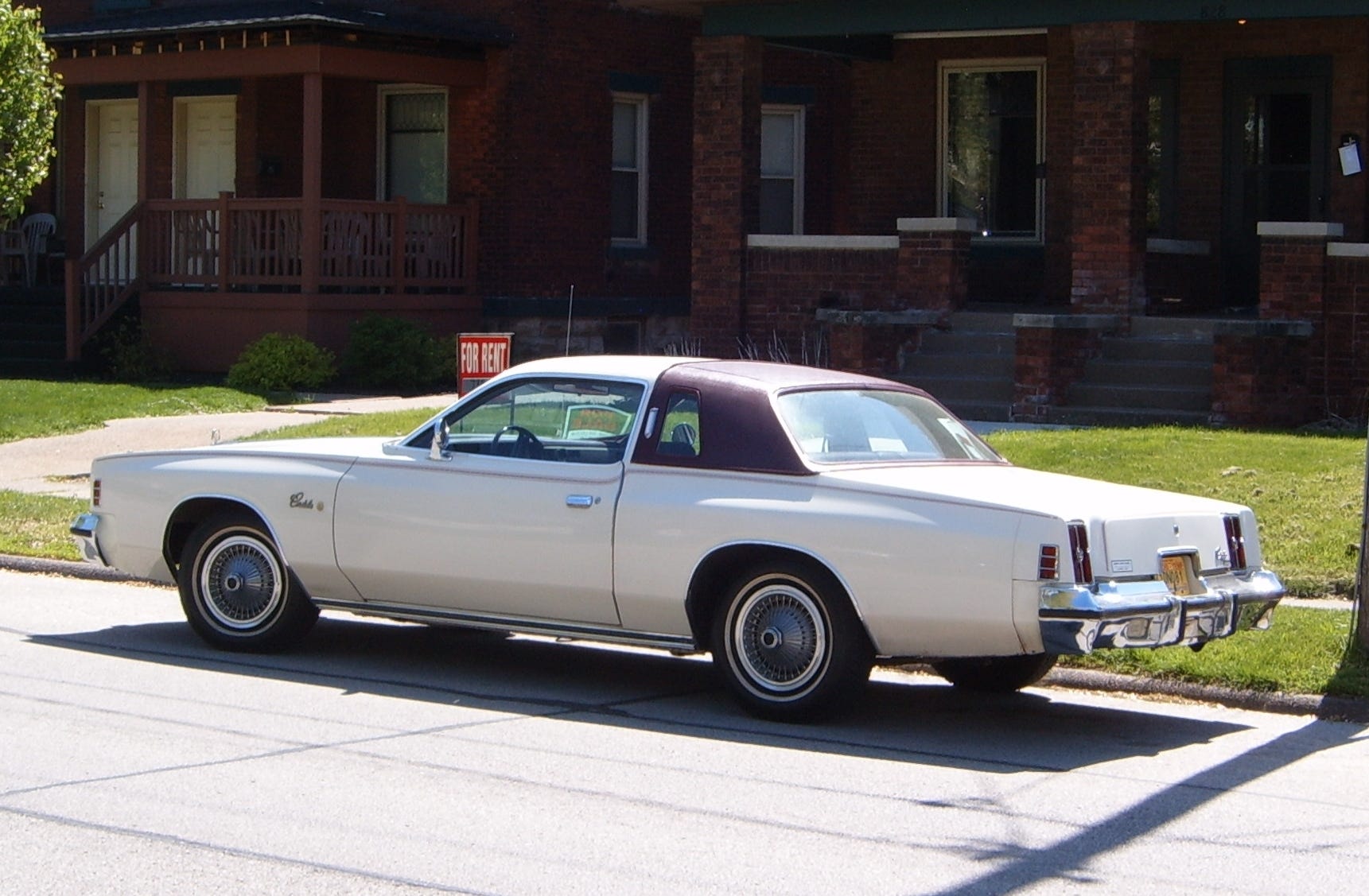
The ’76 is my favorite year of Cordoba. I like the simple vertical bar grille much better than the more ornate looking ’75 and ’77 grilles. It hits all the Brougham-era luxury cues: landau roof, wire wheel covers, whitewalls, Spanish-doubloon type emblems—with matching stand-up hood ornament, opera lamps. Could it have fine Corinthian leather?
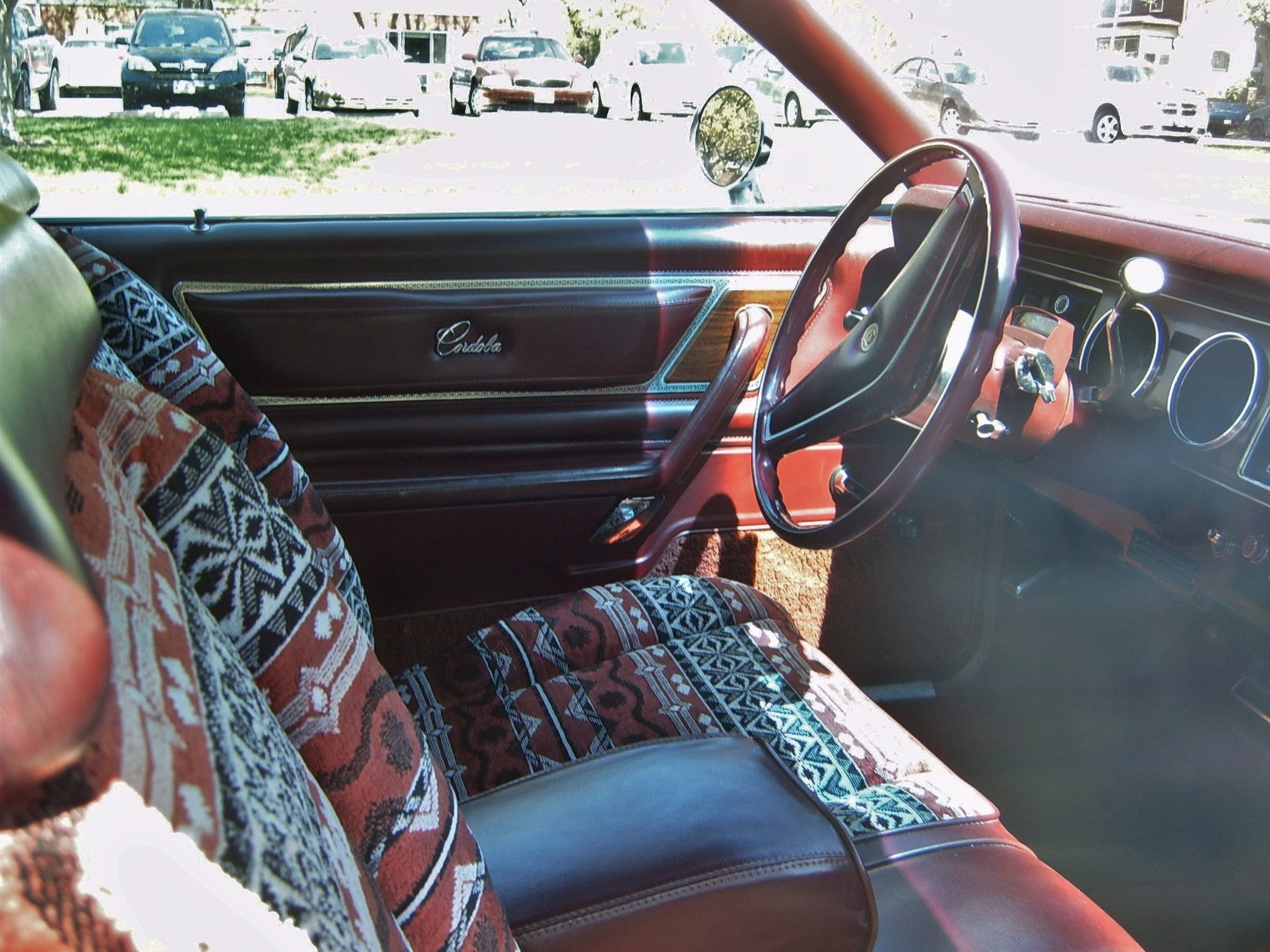
No, but this is clearly a ‘70s domestic luxury car interior—bench seat, color-keyed everything, simulated wood trim on doors and instrument panel. This was one of several optional interiors (other choices included brocade, velour or the well-known Corinthian leather), dubbed “Castillian” by Chrysler. It was apparently the industry’s first Jacquard interior upholstery, formulated no doubt by leisure suit-attired Chrysler marketing scientists.
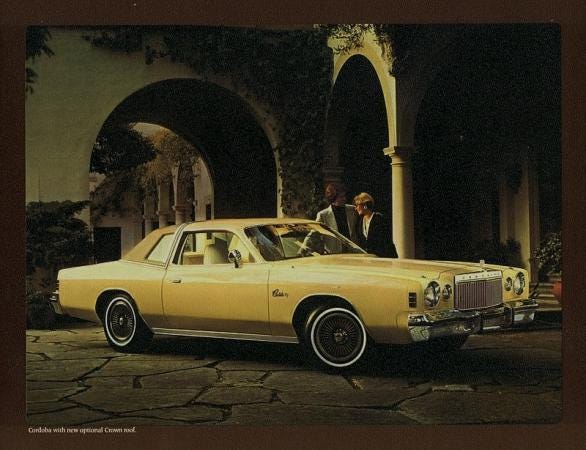
Cordoba’s appearance was little-changed for the 1977 model year, with the expected grille and tail light revisions. A new Crown landau top was introduced, however. Shown above, it featured a different window treatment and an illuminated band on the B-pillar. I would have loved to see a Crown-roofed Cordoba at night; it must have looked pretty cool all lit up!
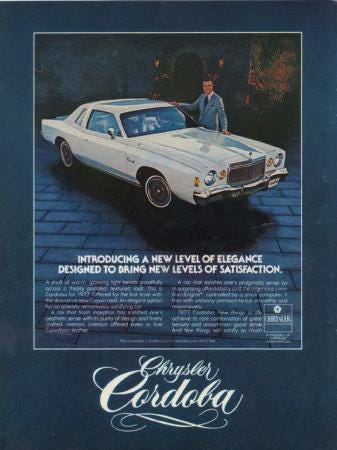
Again as usual, Mr. Montalban was the official Cordoba spokesman. He would remain in Chrysler advertising even after the Cordoba was discontinued in 1983. And while the well-known SCTV parodies with Eugene Levy always spoke of the “Rich Corinthian Leather!”, fun fact: in Chrysler literature and commercials, it was always referred to as “soft Corinthian leather.”
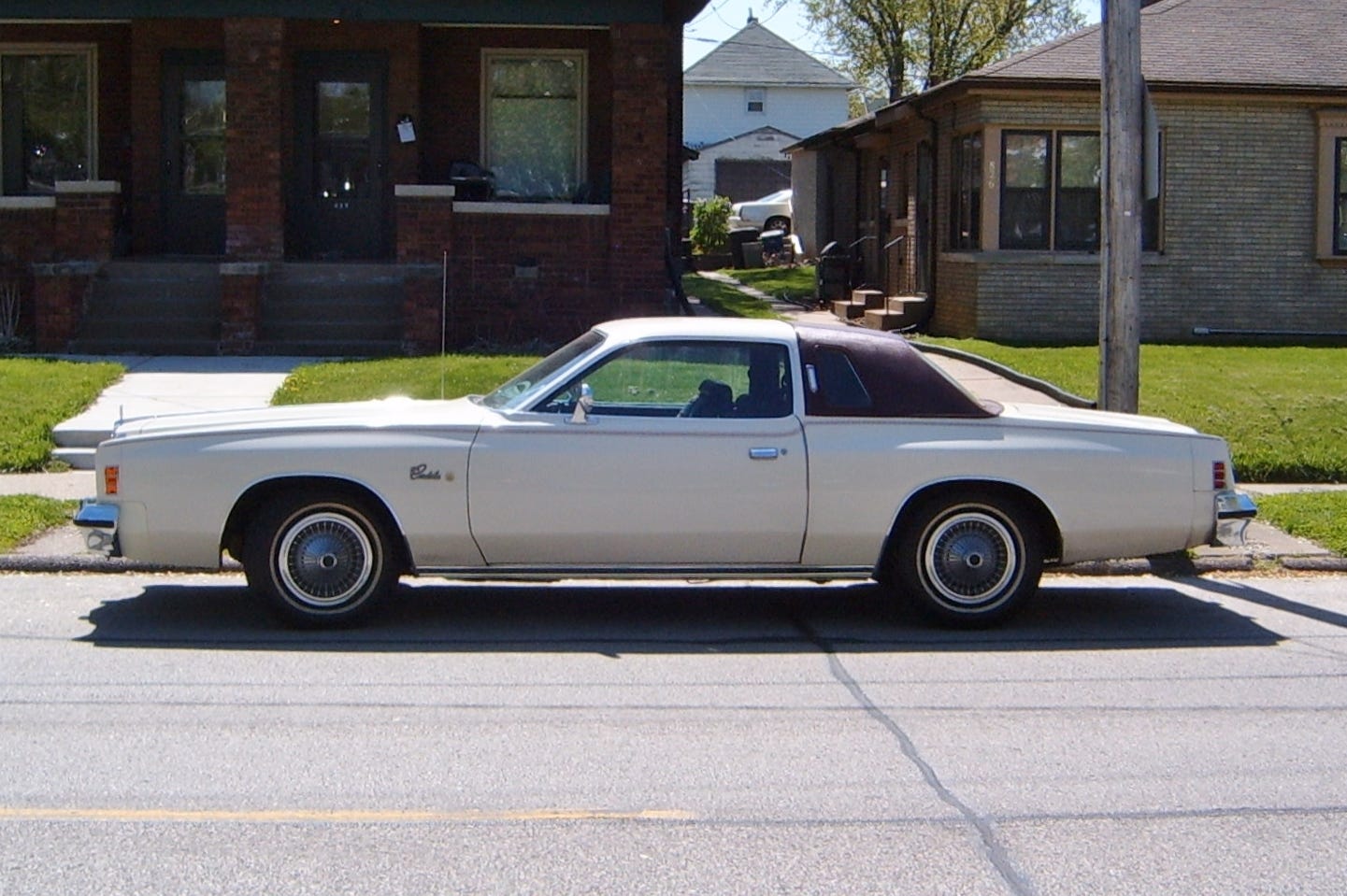
Walking around this car, it’s hard for me to imagine this being advertised as “the small Chrysler”. But it was small when parked next to a New Yorker Brougham.
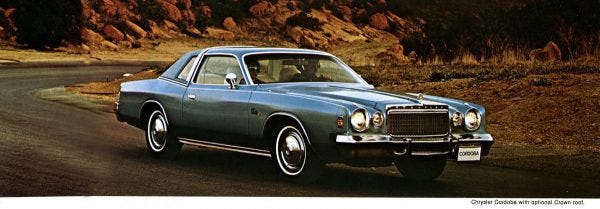
1977 was the last year the Cordoba wore its attractive tunneled headlights and parking lamps. 1977 was also the Cordoba’s best production year, with 183,146 produced.
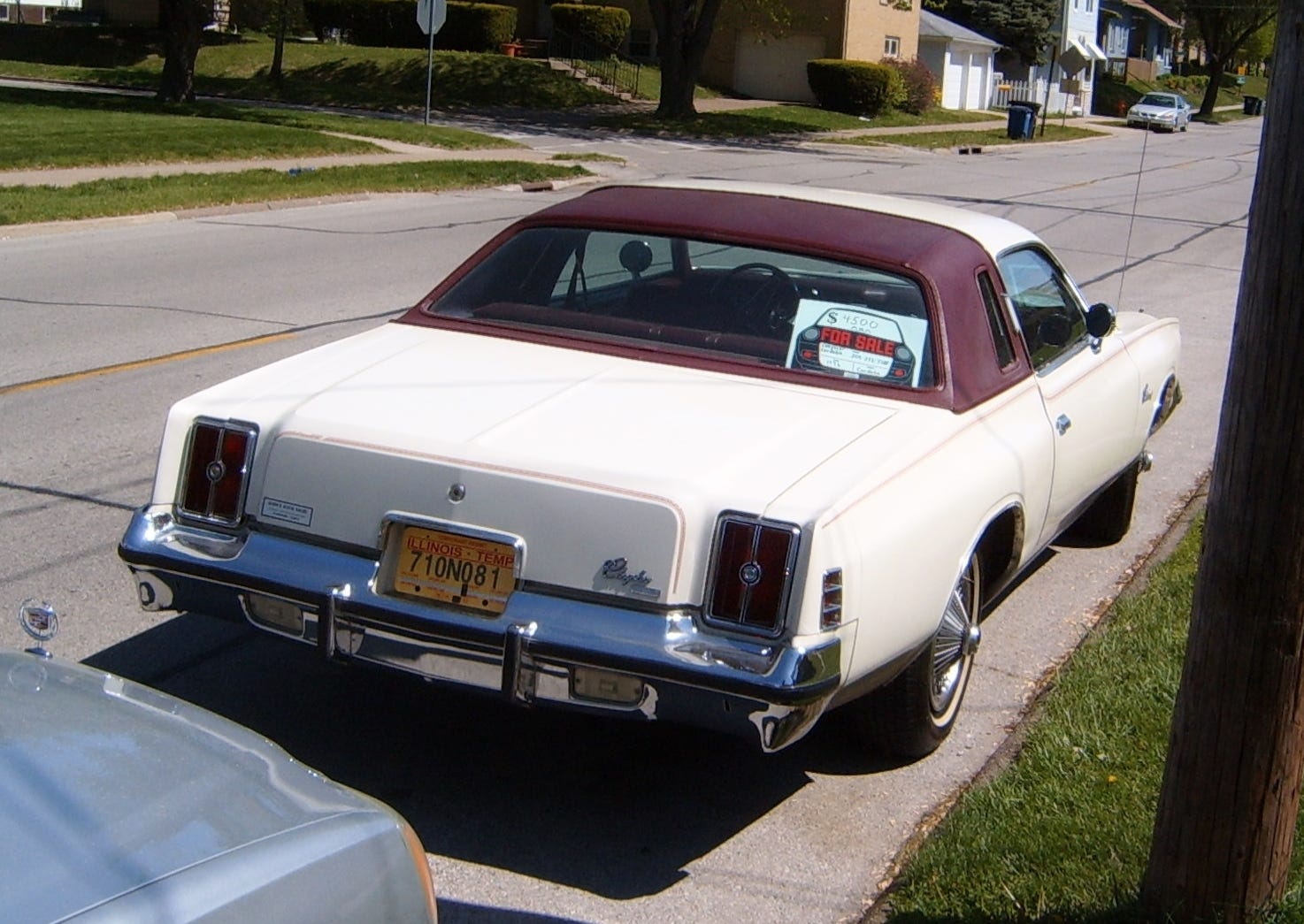
I can’t help but wonder where this car came from. It was absolutely mint. As mentioned, I hadn’t seen one of these in a long time, and even in the early ‘90s most of them were major rustbuckets. Around that time, a nearby neighbor had a nice navy blue ’78 or ’79, but other than that one, every Cordoba I saw was really worn out. Someone really loved this car, and it shows. And in retrospect, $4500 was a steal for this one!
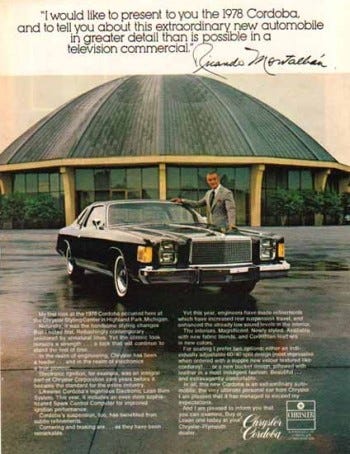
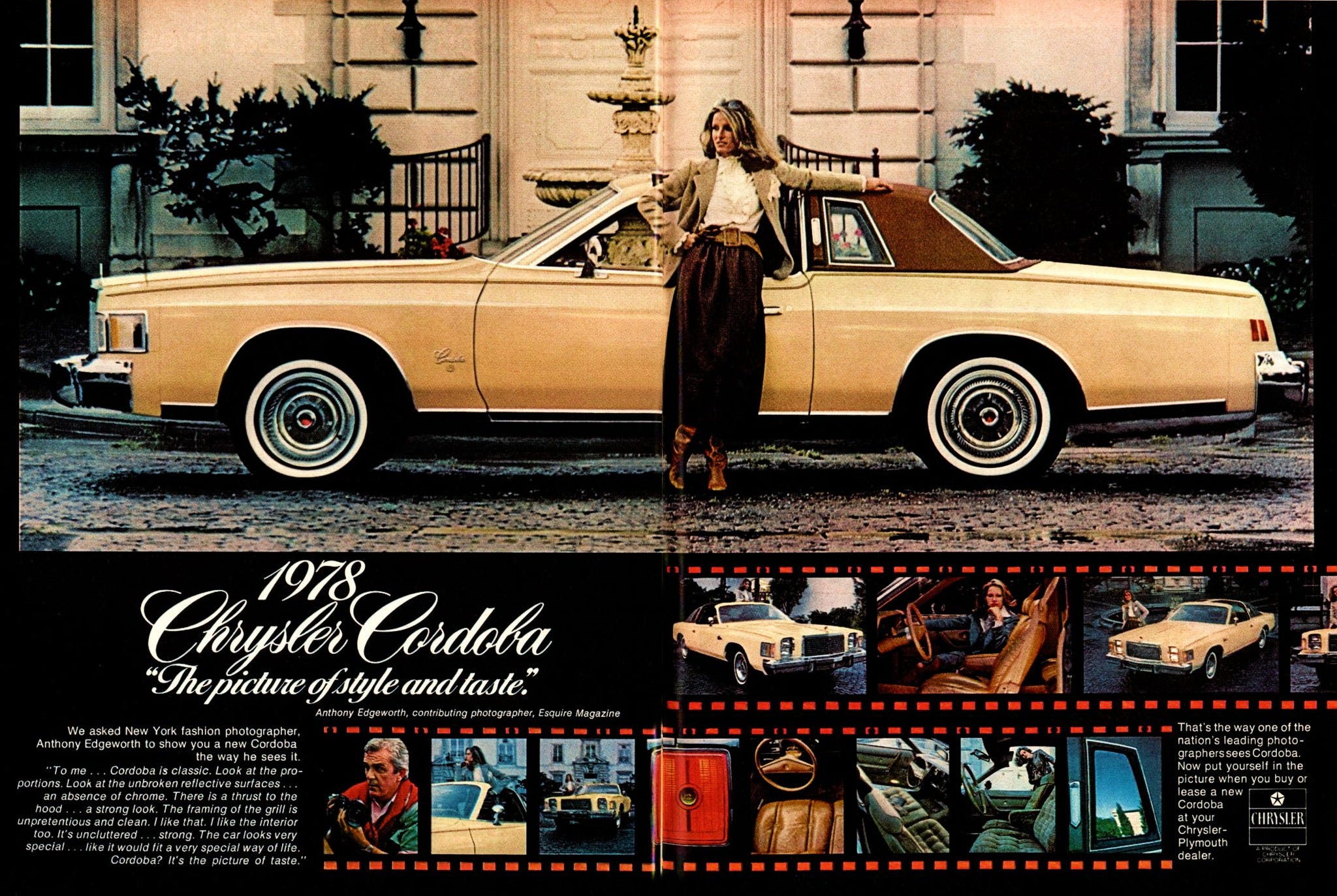
As for the Cordoba itself, a questionable facelift in 1978 resulted in stacked quad headlamps and flatter, plainer tail lamps. While not bad looking, the 1975-77 was much more attractive to your author. The facelift also had the unfortunate effect of making the car look a lot like a 1976-77 Monte Carlo, at least from the front. Sales dipped to 124,825.
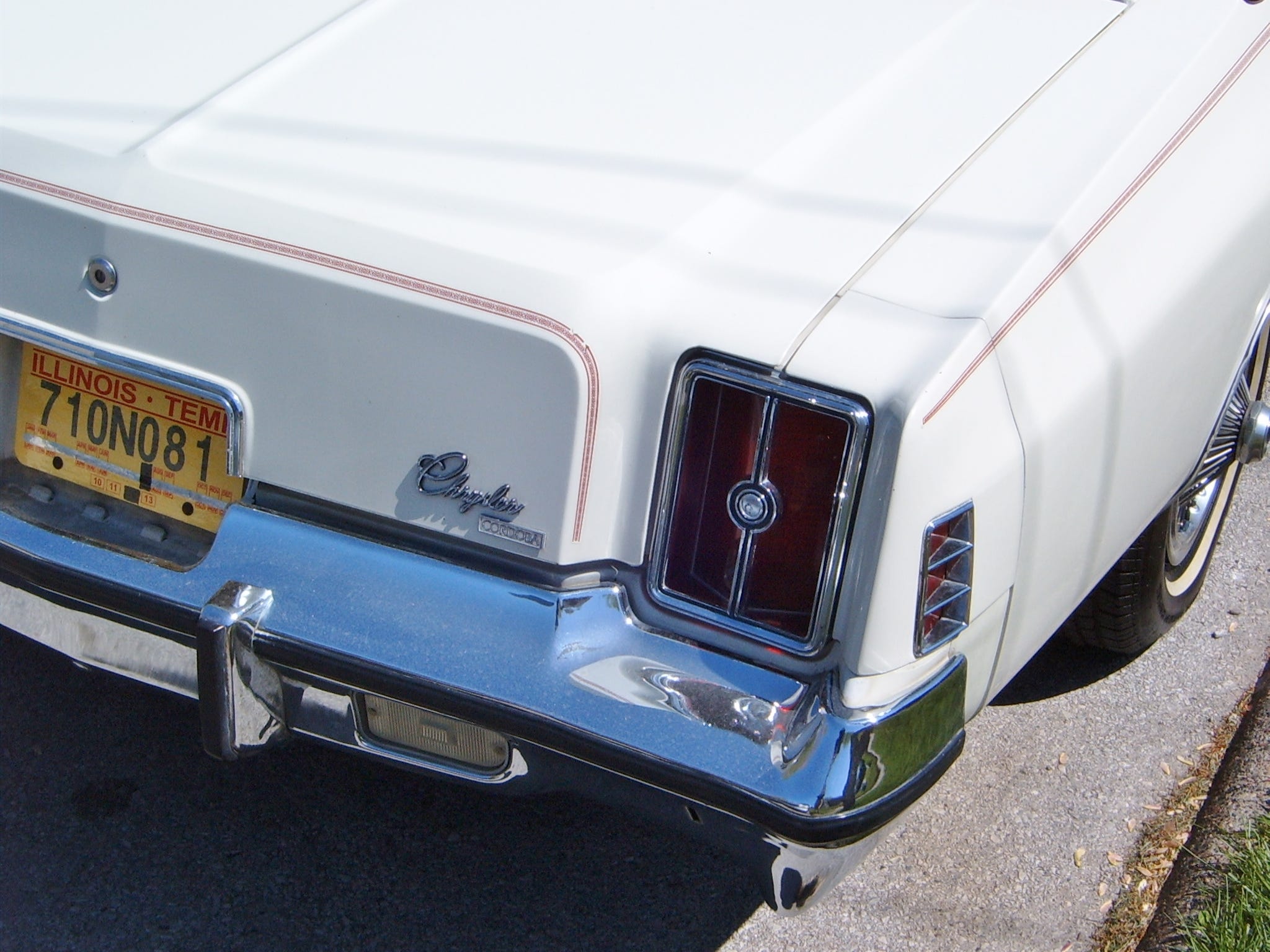
These Cordobas just screamed the 1970s personal luxury Brougham Era, and may well be the only car non-automotive people will remember from the ‘70s—except maybe for Pintos, Vegas and Gremlins!
My parents had a 76 and I learned to drive in it. Maroon with buckets and a console. Felt my first boob in it.
And Farrah’s Mustang II?