

Good morning, friends. A few extra reading links for you, if you’re so inclined. From our own Dave Ryan, we have a sentimental guest post about turning to motorcycles as an adult. Also, our fan favorite Crabspirits has finally done the obvious thing and started his own Substack. Here’s a new piece from him, featuring a Porsche 944!
Alright, off we go.
The meat grinder continues

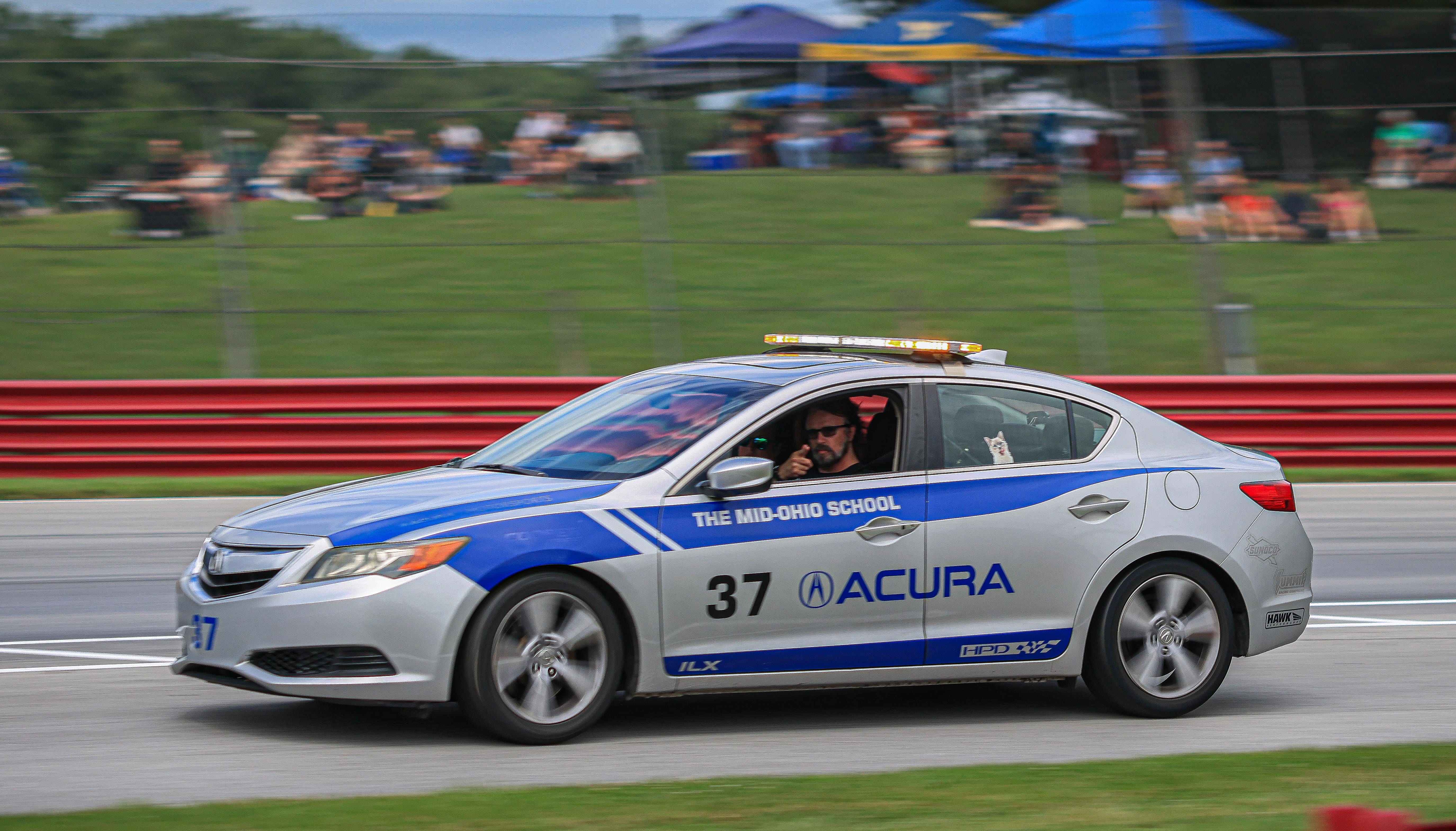
Had I known I was going to spend the better part of half an hour front and center on MotoAmerica’s live feed, I would have tucked in my shirt and gotten my hair done. Oh well. Vanity is the lowest form of self-respect. Once again I was the safety car driver for this often discombubulated organization, running the tires of an old Acura ILX down to the cords and performing all sorts of time calculations in my head: If the front runner runs a 1:32 and I run a 1:53 lap six seconds behind him, how much time can the medic stay on site with this downed rider until we have to red flag?
One consequence of driving the safety car is that you don’t actually see the races, so I’ll leave it to our usual correspondent to give you the play by play. These are my brief observations, outside competition:
The Superbikes turn the same laptimes I do in my Radical, but they hit 184.6mph on the back straight instead of 154-155. It’s fascinating to see the same results through a completely different method.
Keanu Reeves was hanging out on Friday. I was at the Arch garage but I didn’t bother him. I did call my wife and tell her to come over, but she couldn’t leave work. What a drag, to have a job! In real life, Keanu is slightly shorter, and considerably more frail, than I am, while being infinitely more handsome and engaging.
ARCH, Keanu’s firm, is apparently about to debut a two-liter V-twin “Super Hooligan” streetbike. I am awfully excited about this motorcycle that I cannot afford. The race version is ultra-choice.
Not for the first time, I noticed the differences between high-end sports car racers and high-end bike racers. The former are cheerful, often carrying ten extra pounds, bright-eyed, full of energy. The motorcycle men, on the other hand, are starved down to hollow-cheeks levels. Some of them are always in pain; I recognize the facial expressions from my own life. They look perpetually concerned. Many of them are quite tall, which you would not expect. I respect them more than I respect my four-wheeled counterparts, for one simple reason: they are less likely to be killed but far more likely to be hurt. They deal with this by being single-minded. Twice this weekend I had to dissuade a rider from getting back on his crashed bike with a broken hand and cracked helmet shell, respectively. The latter rider took an ambulance to the pits, refused further attention, got back on a different bike for the next race, and crashed again. Then he went to the hospital.
America’s shortest Internet bully debuts new vaporware, the crowd goes wild

You might know John Hennessey as the person who was repeatedly sued for stealing money, defrauding customers and losing court judgments, and threatening to “make an example” of a random ViperAlley reader “in front of your family”. I know him as the person who, after I interviewed him at his Texas shop and brought up all of that stuff, apparently called McKeel Hagerty and complained that I was “bullying” him.
Which is ridiculous. If I’d wanted to bully him, I would have slapped him unconscious at his office, which would have been as easy as deadlifting the bare bar. Anyway. One entirely foreseeable consequence of our automotive media’s hollowing-out is that the same outlets that used to hold Henny to account, like Car and Driver, are now blowing up his four-inch limp balloon for him. From C/D we get:
Hennessey's latest supercar produces less than 1000 horsepower, but the mad scientists down in Sealy, Texas, haven't gone soft. Instead, the Hennessey Blackbird signals a shift in priorities for the American outfit, from chasing speed records to focusing on maximizing driver engagement. While the Blackbird packs less muscle than both the Lotus-based Venom GT and the most recent Venom F5, it will prioritize putting a smile on the face of anyone who gets behind the wheel thanks to the combination of a naturally aspirated V-8, rear-wheel drive, and a six-speed gated manual transmission.
Let me say this louder for the people in the back: you are a fool if you deal with this person. His “Venom F5” is most famous for the way in which its Microsoft-Paint-level “aerodynamics” resulted in a complete destruction of the car, and some damage to an airport runway, during testing. Give Henny credit for realizing that he isn’t competent to design a high-speed supercar — but it would be nice if he would just give up the business together and leave it to more honest people, like Ultra Car Company.
Ask Jack: Empty nester seeks petite European for unsupervised afternoons
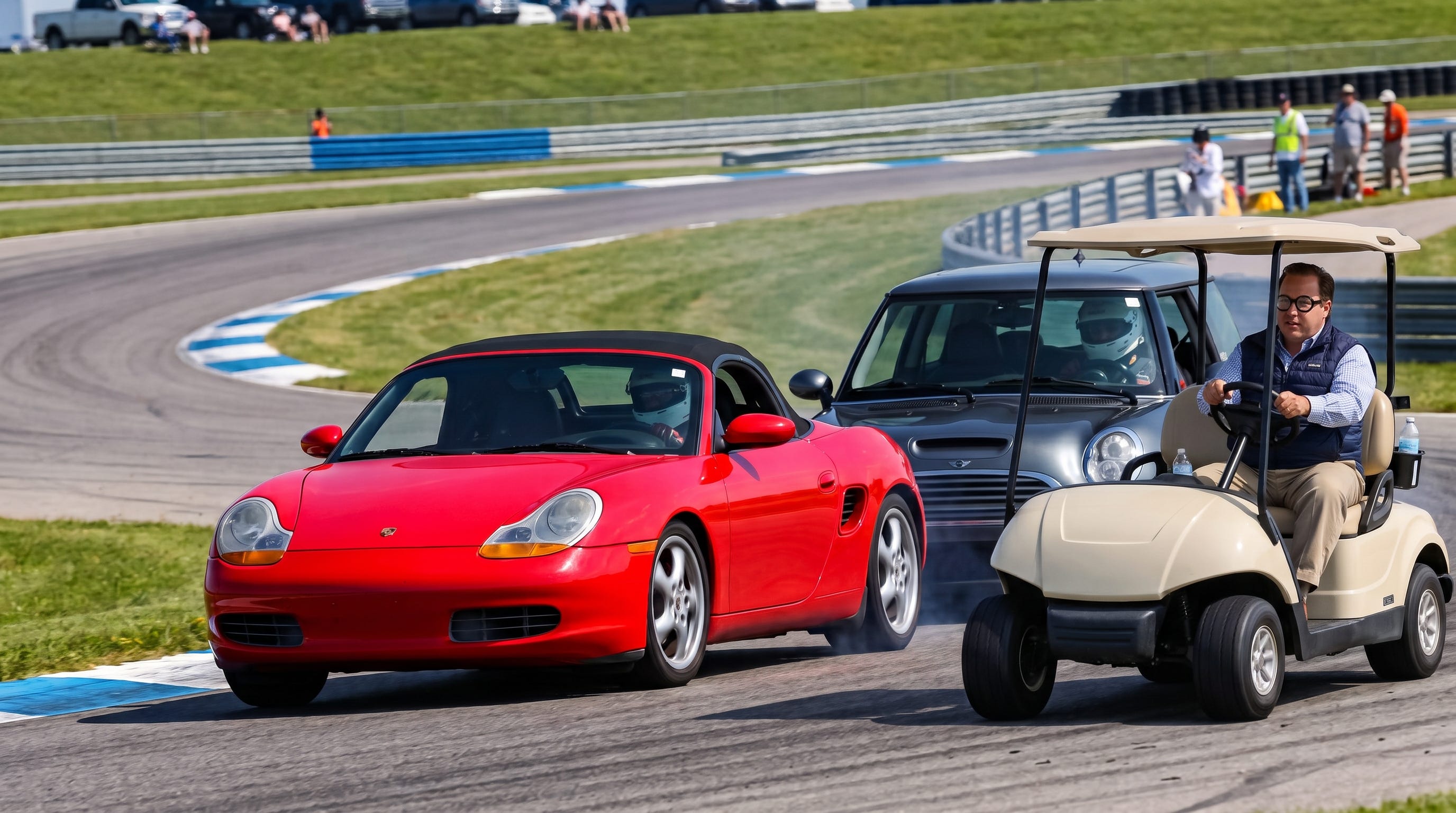
When we last spoke to hp12c, he was choosing between several European coupes for his 50th birthday. He ended up getting a nice manual transmission 997.2. Now he is back, looking for a track rat to enjoy as his children escape the home!
I will be an empty nester later this year when our youngest heads to college and will be in a position to have hobbies and/or friends for the first time in a long time. I have been considering some HPDE days at the track closest to me, NCM Motorsports Park, which has many offerings. I have two other “sporty” cars in the household that could double as novice track cars and need help picking which one to use. Neither one is particularly fast nor valuable, so I could develop my driving skills without worrying too much about bad outcomes on the track. Here are the contenders:
2006 MINI Cooper S John Cooper Works
• Front-engine, front-wheel drive
• 101,000 miles
• 6 speed manual
1998 Porsche Boxster Base
• Mid-engine, rear-wheel drive
• 47,000 miles
• 5 speed manual
• Brey-Krause rollbar and factory hardtop
I believe the answer is “Porsche” due purely to driving dynamics, but the MINI is a hoot to drive and I was actually surprised how close the performance specs are between the two. Keep in mind I need to drive to and from the venue - no desire for a trailer - so whatever I need for the day needs to fit in the car. A set of track wheels and tires fits in the MINI, the Boxster not so much. I presume the running costs and consumables will be similar.
Before I answer, let me take a moment to reflect on how easy my job is compared to, say, the “Tough Love” lady from The Free Press. She is always dealing with the most awful questions, usually about collapsing marriages. Picking a car is light work compared to advising the lady who just bore three kids to a dude she dislikes.
That does not mean, however, that we don’t have some “tough love” coming up in this one. The first answer to our reader’s question is simple: Either of these cars will suffice as a track rat, don’t worry, they’re both fun, just try both of them and see which one you’d rather drive! He can walk away with that answer: it is a good and true response.
Now for the tough love. Neither of these vehicles is a serious track car in the modern era, for two reasons:
slow as shit to drive
expensive as shit to run
It can be fun to run a slow car on track, if it’s cheap. It can be fun to run an expensive car on track, if it’s fast. But what our friend has here are two cars that will have the approximate pace of a well-sorted NC Miata with the parts availability and running costs of, respectively, a 2006 BMW M3 and a 1998 Porsche 911 Turbo. There are very few cheap problems with either of these cars. Regular track use will almost immediately result in significant costs related to: bushings, bearings, tires, brakes, brake lines, power steering, and so on. For the MINI, add the supercharger drama and a panoply of leaks. For the Porsche, add hyper-expensive control arms and, very possibly, an engine seal or two.
Either car will suffice for the occasional low-pace, entry-level trackday where you don’t feather the tread blocks or boil the brakes. If our reader gets in the habit of driving on track, however, the correct answer is to sell one or both of these cars and buy an NC Miata with a proper roll bar. Alternately, get something like a Z4M, which won’t be much more expensive to run than the above cars but which will do a much better job of keeping up with traffic.
For now, however, there are no hard choices to make. Start your trackday career with the MINI, because it is less likely to loop on you. If you get tired of grinding the front tires, switch to the Porsche. But don’t make long-term plans with either.
One more thing: Note that I said “NC Miata” above, not “Miata”. I’m no longer recommending NA or NB Miatas for anything on track. They are basically vintage cars with awful crash performance. Unless you have a need to run a 1999 NB in Spec Miata, get the car that wasn’t designed during the Reagan Administration.
Please, God, let this be real
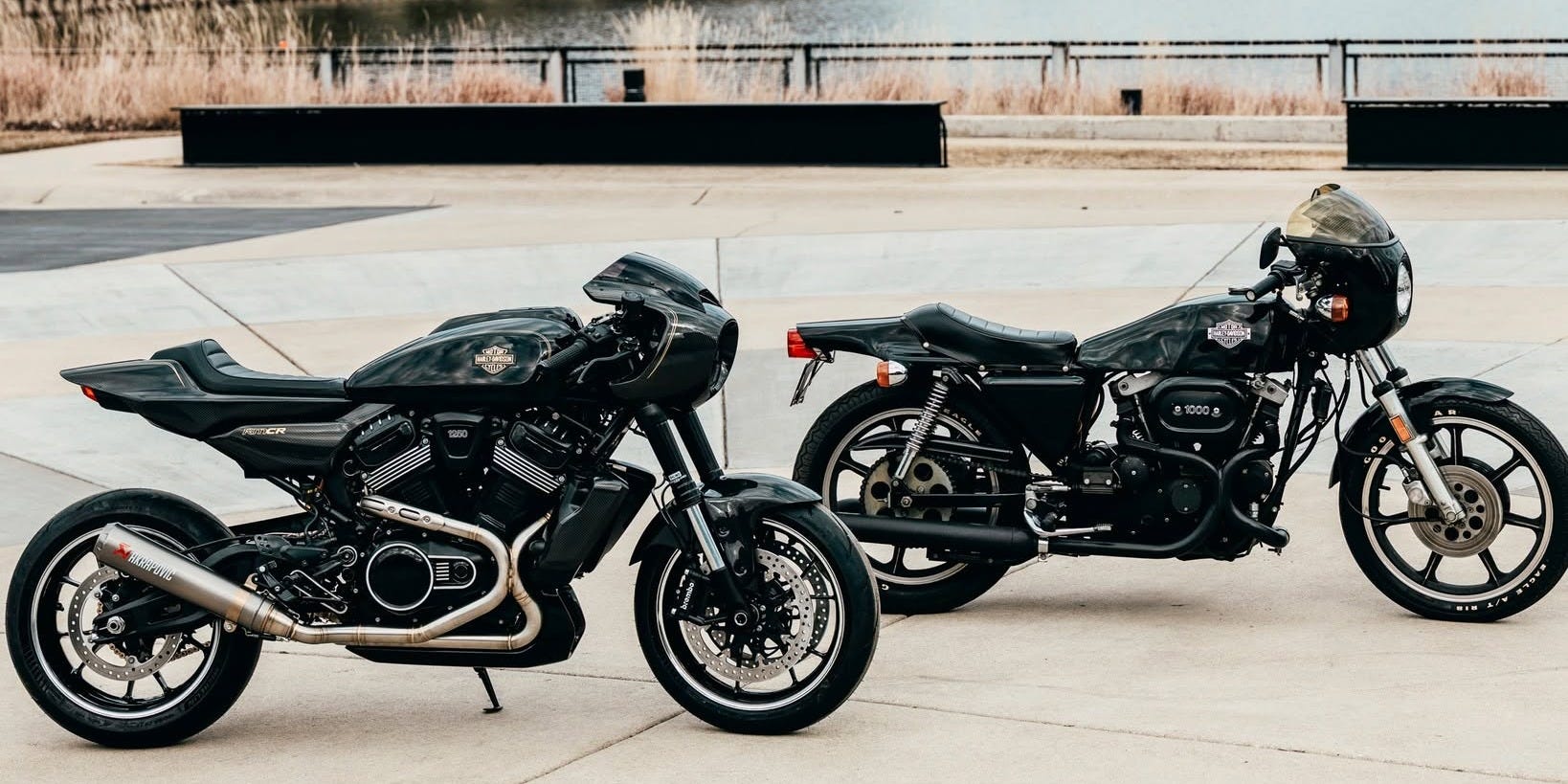
Harley-Davidson has filed trademark paperwork for two new model designations: RMCR and RMXR. Assuming that The Motor Company continues along its general previous model-designation path, these models should connote:
RMCR: Revolution Max Cafe Racer. This one requires no detective work because Harley revealed an RMCR concept earlier this year, seen above. Everyone wants it to be a forward-leaning bike with the 150hp version of the RevMax engine. It could wind up being a forward-leaning bike with the 121hp Sportster version, but there is really no reason to do such a thing.
RMXR: Everyone is hoping this is an XR750 flat tracker tribute with a full-power Revolution Max engine. This would be a natural successor to the XR1200, which was kind of like the Harley that everyone but Harley buyers seemed to love. They were showroom poison but resale platinum. Fitted with the 975cc RevMax, on the other hand, this new bike would have about 90 horsepower, which is just what the XR1200 had.
The consensus of Internet Expert Motorcyclists is that the RMCR is the fancy, expensive 150hp bike, perhaps costing $20,000, and the RMXR is the $11,000 entry-level option with 90hp. This makes sense because Harley will want some sort of pricing ladder for their “sporting” RevMaxes. What I hope the company does is to send them both out the door with 165hp. This would probably drive a stake through the heart of the revitalized Buell operation in Grand Rapids, which is currently doing business on the basis of having a USA-made 180hp cruiser for sale.
I would like to say that I’m a candidate for an RMCR but, honestly, I’m still a Pan America guy. I think. Let’s see it in the metal. ‘Cause if it’s super-dope, I could get an RMCR to ride locally then get a V85 Strada for longer trips.
Limits to growth
Our old friend Pete Dushenski is back on his (not quite) bullshit, this time discussing five reasons why the personal automobile has no future for broad-scale transportation. He’s not arguing against the existence of the car. He is kind of stating that cars will be the horses of the future: mostly owned for recreational purposes by awful people. His five points are discussed thoroughly in his article but here’s the nub of it:
Thermodynamics. There will be less energy available in the future. Cars are the worst way to take one person from A to B.
Land. Urban real estate is precious. A lot of it is covered by asphalt when it doesn’t need to be.
Geometry. Every car added to an urban road network makes things worse, while every person added to a transit network helps scale the costs and improve the service. No one who has ever lived in New York City would believe the latter, but there you go.
History. The car was imposed via government fiat, and could be removed the same way.
Human health. Cars are bad for our health, they make us fat, they poison the environment.
Obviously, Pete isn’t the first person to make these points, which can be found in every thinkpiece ever published everywhere. However, he is probably one of the more naturally intelligent people to look at these points collectively and say, “Well, this doesn’t mean cars are done, they’re just done as we know them.”
What depresses me about Pete’s list is that there’s a missing sixth point, and I’ll provide it below.
Intelligence on the wane. It is highly likely that human beings, taken as a statistical whole, have not been this stupid in ten thousand years. Every high-IQ population on this globe is in demographic free-fall, while the low-IQ populations are reproducing at positively rabbit-like rates. Each time you fail to add a new smart person to the planet, you are reducing the number of possible solutions available to all the above problems. Each time you add a stupid person, you increase the urgency and magnitude of the problems.
Allow me to demonstrate: The availability of cold fusion would immediately render all five of Pete’s points irrelevant. With essentially unlimited energy, we could build arcologies that house 100 million people each and have plenty of road access. But the majority of the scientific brain mass that would likely perfect the technology is, as we speak, being absorbed by a tissue in front of a computer screen. Meanwhile, the planet is forecast to add at least 2 billion new citizens with a median IQ of about 85 between now and the year 2080.
I’m not trying to make some sort of eugenicist argument here, merely pointing out the obvious. Smart people of all races no longer bother to reproduce at replacement rate. Your humble author is as guilty as most here, by the way, so I’m hoping that my son represents a sort of bottleneck point in a future million-strong population of arrogant, unpleasant-looking Baruth-lineage six-footers.
If you look back through historical media, you will find that our society started being openly pessimistic about the future in around 1972. This was when the fertility rate for American citizens of European ancestry dropped below replacement levels. Things are even worse in Europe. Japan fell through the floor in the early Seventies, but Korea didn’t follow them until 1983. Does that help explain Korea’s vitality compared to Japan during the last few decades? Another country that has been famous for intelligent residents: Persia/Iran, which is now well below replacement rate.
(Topic for another day: The two major crises around the globe, Russia v Ukraine and US v Iran, are both between high-IQ dying populations.)
“With enough eyes,” the programmer’s maxim goes, “all bugs are shallow”. An intelligent, scientifically-oriented population is literally a parallel supercomputer. Every major advance in history, from the pyramids to the low earth orbit, has been a result of a relatively high-IQ nation. If you take the contributions of five countries off the map — Germany, Japan, Russia, Britain, and the United States — you are left with a pre-industrial society. Almost nothing of value has ever happened anywhere else.
Today, only four countries really matter:
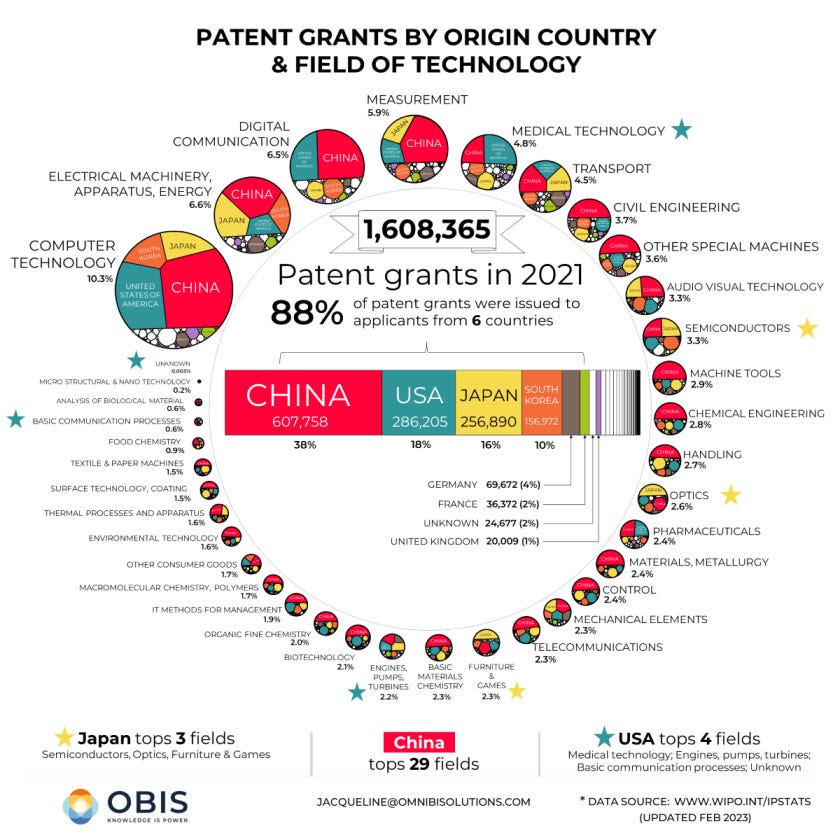
In the years to come, we will continue to be media-bombarded by panicky statements about “the energy crisis”, “the environmental crisis”, and a dozen other crises yet to be named. (Perhaps, even, the Crisis on Infinite Earths!) Try to remember that there is only one actual crisis: the relative disappearance of intelligent people. What did Matt Damon say? “Our age of bronze is coming to a conclusion.”
Oh — and if you think that “AI” will supplant the lack of smart people, you’re not thinking hard enough.
Thanks for reading, everyone. Come back later this week for
CAT TALES: Tiger Agonistes
As regards the loss of optimism about the future: that is also around the time American culture shifted into one more focused on generation-as-island instead of generation-as-link-in-the-chain. I suffer with this daily, and all I can do is work to be otherwise.
As regards the clown-car operation of MotoAmerica, from a distance, well it's still not great but at least no cameramen were almost run down in pit lane! Their website continues to be an embarrassment to website design everywhere, and their VOD layout makes me want to pull my hair out.
Supersport continues to be the Darryn Binder vs Josh Herrin show with Binder currently getting the leg up. This time Darryn hadn't even been to Mid-O before and still won both races. The first race was him learning the track and putting a hard late move in against Herrin in the final lap. What do I mean "learning the track?" he was faster and faster as the race went on; consistently improving with personal best laps. Race 1 is worth watching for this showcase in talent alone.
Race 2 for supersport is a four-way fight for most of the race and here it's worth mentioning Kayla Yaakov. She, a rarity of rarities, appears to be the real-deal in terms of competitiveness as opposed to the usual "look a girl racer!" who runs mid to back pack. She hung on to the top three within a few tenths for the duration. She is consistently faster than Blake Davis, Alessandro DiMario, Ty Scott, and the other boys she raced with in the Twins Cup. Herrin and Binder at the front changed lead several times. Herrin with four to go makes a pass which puts him in the lead for the next pair of laps before purposefully putting himself behind Herrin. The idea being to draft and block pass in the back straight. Darryn goes tight and blocks the move to hold on for the win with excellent racecraft. Yaakov takes Josh Hayes, the oldest man running, in the last lap for third.
King of the Baggers is the Hayden Gillum show and it is great to see him win. He is quite likeable as a personality and hilariously large which makes the bagger a fitting ride for him. This includes overcoming a trash tier start in race 1 to come back from 6th (the field is 11 bikes).
Superbike racing is still ongoing and the championship is surprisingly close between Sean Dylan Kelly, Bob Fong, and JD Beach (?!).
PSA: Origin made a 2.0 version of their As Seen on ACF USA-made cotton pants, so they're running a closeout sale on the old ones: https://originusa.com/products/moab-stretch-cotton-pant-straight-retired?variant=51015227572502