

Good morning, friends. We have two brief commercial messages for you. Sadly, these are not “affiliate links” for me, but I still think you should see them.
Rolling Heavy Magazine is back! Matt Grayson, the man who “put the tits and ass back into vans”, has issue #17 for you right now. It’s always worth reading, even if you don’t like naked girls. Tell him Jack sent you, and also to make the girls taller.
ACF readers can get 20% off the Impex Gold Edition of “Songs My Mother Taught Me”, produced by our own John Marks, by using code “JACK B”. Make sure you leave the space in there. This was Sterophile’s Recording Of The Month in June of 1988. If you’re not sure if this sort of thing is for you, there’s a free audio sample on the page.
Return of the clerk

"I knew it was going to be tight. Max is an animal on track, and I feel like sometimes when I close the visor, I can be that as well. And that's why it's exciting because I know he's not going to leave me much space, and the same I will do for him.” There are times when Charles Leclerc comes off like a sort of F1-parody-as-seen-by-Americans; think “Jean Girard” in Talladega Nights. Kind of fey, kind of gutless, someone who can qualify like a machine but then races like a coward.
He isn’t that person, and the Austin GP made this clear. He’s a few points behind Lewis at the moment, but if you remove the races where his car failed he’s clearly been the better driver all year and now it’s becoming painfully apparent. In what looks like an attempt to compensate Lewis for their awful strategy as of late, Ferrari gave their older driver the undercut twice on his own teammate. It didn’t matter. Leclerc had the better setup and he was also by far the driver with more moxie behind the wheel. His back-and-forth with Max Verstappen was a reminder that when F1 is good, it’s simply miles better than any other spectator motorsport.
This season is a foregone conclusion; Kimi basically needs to finish one race anywhere in the points this year and he’s the world champion. But there is still a lot of pride, and money, to be extracted by the other players. It seems likely that Max and Charles will both catch Lewis before the end of the year. Will they catch George, as well? Don’t bet against it. Other notes:
Alright, you filthy animals, I admit it: Liam Lawson is getting it done. Whether it’s effortlessly browbeating his teammate, moving through traffic, or playing a John Mayer tune for a crowd of adoring female fans on his own bright-pink Taylor signature guitar, the driver previously known as Yuki Tsunoda’s Punching Bag is coming into his own. The hybrid formula suits him very well and he isn’t missing chances.
Meanwhile, his only actual competitor, Isack Hadjar, is proving to be increasingly unhinged on the radio, at one point briefly deciding that he wasn’t going to move over for Max Verstappen. The resulting two-corner delay in swapping positions had Verstappen utterly furious, and justifiably so. Red Bull does not operate under Papaya Rules; Hadjar is effectively Verstappen’s employee. It would be different if he could get anywhere close to Max on raw pace, but he cannot and neither can anyone else.
Kimi Antonellli is probably the second-best driver on the grid right now. Isn’t that amazing? He is utterly impervious to pressure, he makes very few mistakes. He can preserve tires and he can make passes. Meanwhile, Princess George celebrated a second consecutive week of being unable to pass a much slower car. He should go to IndyCar, where he would be the greatest talent the sport has seen since the departure of JP Montoya.
I read an interesting analysis that claims Aston Martin has the fastest chassis in the field, and that the gap between them and first place is entirely due to the Honda powerplant. God knows Alonso is getting it done. He qualified 12th in a car that visibly lags behind the competition on the straight with overtake enabled.
The alpha desk diver, examined
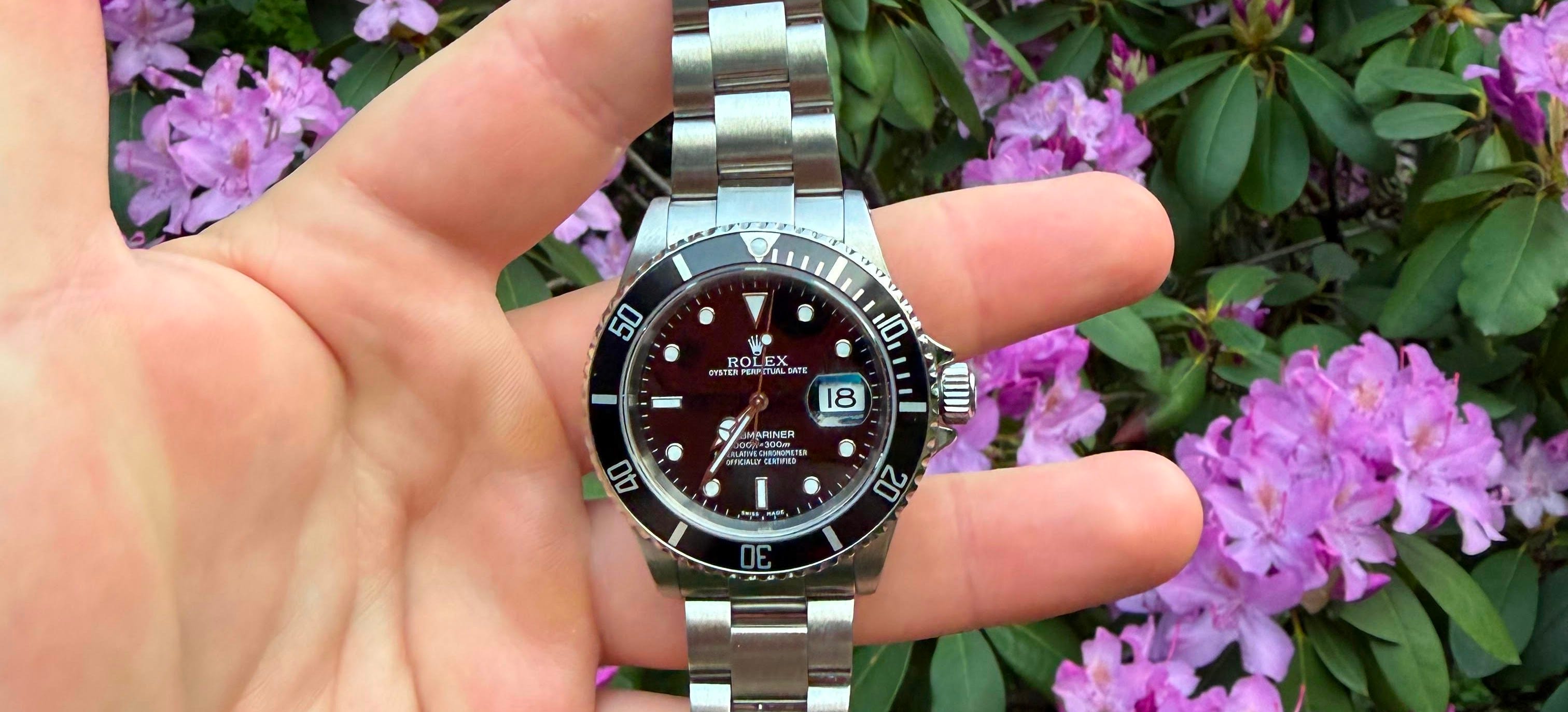
A Trackday Club member who is Rolex shopping submits this guest review:
I truly enjoy learning the vernacular of specific new hobbies and niches, sometimes more than the hobby itself. As those of the horological bent likely already know, a “desk diver” is a dive watch worn exclusively to bash against burled walnut boardroom tables but in practice, more often the particle board holding up the Bloomberg terminal.
The “desk diver” is a popular piece of kit in my line of work, and perhaps none is as popular or iconic as the black on black submariner. The Rolex Submariner needs no introduction; its been a tool watch (and often a watch worn by tools) for over 70 years, but really coming into the spotlight in the 60s and 70s. The particular model I decided to lay down a not-inconsiderable amount of money on is a 16610, produced from 1988 to 2010. The pictured model is a K serial 2001 production model, which includes solid end links (“SEL”, not a Passat trim here) as well as the super-luminova lume, which represents a significant upgrade over earlier Tritium models.
How does it wear, and should you buy one? One, it goes without saying that you have to want a Rolex. There’s a million reasons to buy a Seamaster over a Sub. You can get a newer box and paper example on the grey market for 75% or less of what you will spend on a neo-vintage Sub. If you are like me and have a strong preference for the Crown, though, you know what you must do. If you don’t get it, then move on – this is much like the Poor-cha market in 2026.
Handling a variety of CPO watches at my local AD, I actually first bought a 36mm Explorer I, which proved to ultimately be small for my 8.25 inch wrist. But the jewelry-quality finish and significant heft of Sub ultimately brought me back – more on that in a second. The Explorer I is a lovely watch and nicely compact in 36mm form, but in 39mm or 40mm sizes, the dial feels oddly vacuous in person. It is, however, incredibly comfortable in a way the Sub simply is not. That heft may be the largest drawback of wearing a Sub every single day. As a man of considerable heft myself, I actually enjoy the sensation of knowing at all times that the watch is there, but women, children, and men of diminutive builds might find it tiresome over a long day. The other thing our bantam weight brothers may not enjoy is the large presence – at 47.5mm lug to lug, its not a small watch. It simply does not at any point “disappear on the wrist”.
Day to day I find the timing bezel useful, the dial legible and easy to glance at, and the finish and appearance appropriately polished and the correct amount of flashy. The lume is strong and particularly helpful when trying to rock an infant to sleep and desperately measuring out the time you’ve spent doing so, and I’d imagine it would also be of high utility when, y’know, diving. But ultimately I find it hard to believe that other formats (save multi-function electronic watches like a Casio) of watches can possibly be more useful in day to day than the timing bezel/date format that is presented to you on the 16610 Sub. One of the reasons I opted to invest in a nice daily wear watch was to prevent the umbilical cord attachment to my phone for something as simple as time, date, and minute tracking – you’re always one email notification away from existential dread and pulling you out of the moment in which you find yourself, whether that is with your children, partner, or simply trying to forget the horrors of W-2 existence. This watch will allow you that freedom while making a statement - if you like that statement, that is up to you.
16610s and other 5 digit Rolexes appear to be getting more popular as the time period where Rolex nailed the luxury and tool watch intersection before veering off into another universe. For me, the aluminum bezel assures cheap and plentiful replacements (at the cost of the slick ceramic look), and the 3135 movement is a known quantity with good parts and service availability.
Does it make sense for you? If you want to scratch the itch of a full sized Rolex that should be a lifetime piece, absolutely. Prices have dropped significantly from the PLANDEMIC highs and settled nicely into the $8.5-$12k range. While production volume (over 525k 16610s were made) means that you’re unlikely to see any rapid or maybe even medium term appreciation, as a wearable value-store and daily driver (diver?), it would fit most people’s bill nicely. Is spending five figures on a stainless steel, black dial dive watch designed in the 80s positively insane? That, dear reader, I leave up to you.
2001 Rolex Submariner 16610
Price as tested: Approx. $9,250
Highs: It’s a Rolex, excellent blend of luxury, utility, and presence
Lows: It’s a Rolex, heavy, the Seamaster exists at a substantial discount
Conclusion: If you think you want one, you do. If you aren’t sure, go get a Seamaster.
In which women swear at Marshawn Lynch
This clip has resurfaced and is being much-discussed again. In it, some sassy fat woman decides to start abusing the coach of a Seattle youth football camp… that coach being wealthy businessman and famous street BMX rider Marshawn “Beastmode” Lynch. Oh yeah, he was also in the NFL, apparently.
The sequence of events went like so: A few of the kids were goofing off during a drill so Lynch told them to “get the fuck out of my drill”. This made one of the kids cry, so the mother decided to confront Lynch.
“Is there a man here with you?” he asks. This got a lot of people upset, but that’s because they’ve never operated in a traditional Western culture. Lynch is looking to do the honorable and ethical thing by having the argument, if an argument must be had, with the father of the child rather than with the mother. But of course there’s no father there — look at the woman and you know why. So he patiently explains to her that he expects the kids to participate in the drill to the best of their abilities instead of goofing off. The woman, who has never before been in a situation where she isn’t being treated by authority figures or welfare administrators with the deferential gentleness appropriate to a live human-garbage grenade, repeatedly tries to correct Marshawn, who finally says, “I didn’t want you to get away to go and throw dirt on my name but I understand I’m not gonna be able to please everybody which I’m fine with.”
The reader who sent me the video asked, “If your son was doing a clinic with Stanley Clarke or another prominent musician, and that musician harshly criticized him, would you take action?” It’s a fair question, and I think my best answer is this: My son is not yet eighteen years old. If you have a problem with him, you actually have a problem with me, and I will settle that problem with you depending on my independent evaluation of the situation. But if we are in a situation where I have ceded authority to another person, however temporarily, the rules are different. If I trust Marshawn Lynch to train my son, I’m going to give him some wide latitude in how that gets done. This would be doubly true in areas where I have zero expertise or knowledge. If the Commander’s ROTC detachment commander wants to make him do a thousand pushups or fight him in the ring like Richard Gere and Louis Gossett, Jr., I’m inclined to stay out of that discussion. If you’re going to be a helicopter parent, at least try to not be an attack helicopter parent.
The whole situation strikes me as sad. Marshawn Lynch is reportedly worth fifty million dollars. He’s training these kids because he wants them to succeed, not because he needs a paycheck. If someone of his talent and prominence is making himself available to a child, that child’s mother should think twice before squandering that opportunity just because ain’t no man gonna raise his voice to my boy.
News flash: this is not a building where stuff is being drop-forged
A social media influencer has decided to run Wilwood, a well-known supplier of brakes to the aftermarket, up the (American) flagpole for potentially fraudulent claims that their brakes are made in the USA:
Wilwood stamps “Designed • Tested • Manufactured in U.S.A.” on the badge — and their U.S. Customs record tells a more complicated story.
2,627 sea shipments logged by U.S. Customs and Border Protection. Taiwan: 1,433. China: 1,058. That’s 94.8% of everything Wilwood brings in by sea — and it’s not packaging. It’s caliper castings and forgings, brake pads, rotors and hubs: the core brake parts themselves, shipped in by the companies that make them.
And it’s current, not history — the most recent shipment landed 10/14/2026, and October alone brought 31,179 kg of brake rotors in from China.
The honest limit, because I print those too: shipping manifests prove import flow, not a company’s total production. Imported castings may be machined and finished at their Camarillo plant — the record can’t rule that out. What it does prove is the volume, the cargo, and this: nowhere on Wilwood’s own site is there one word disclosing imported content.
I salute this fellow, he is doing God’s work. I called Wilwood but they had no interest in talking to me about it, so I went through other publicly available information, in particular a factory tour given to Dirt Wheels a few years ago. The article illustrates the limits of enthusiast media, beginning with the following:
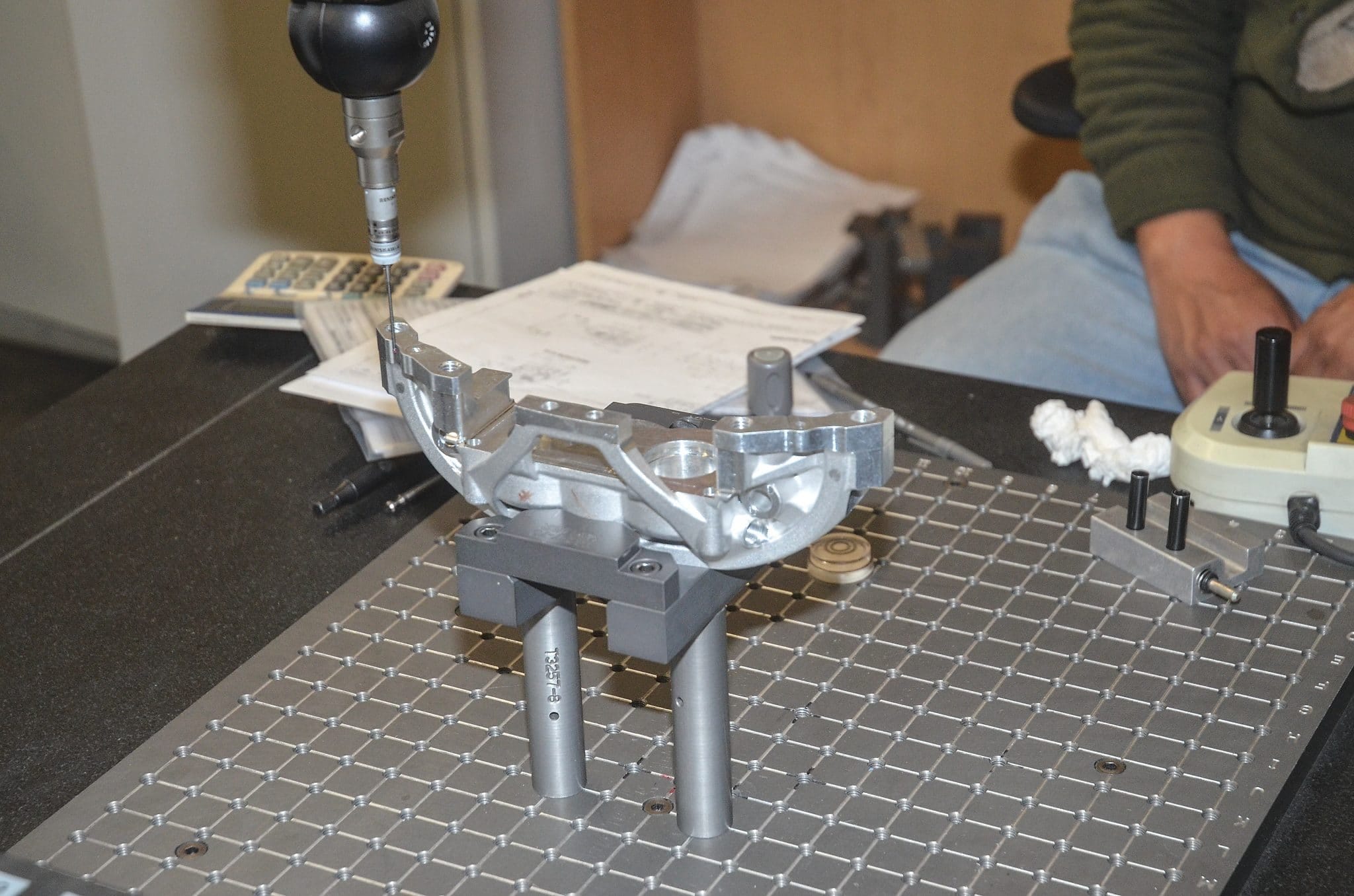
The first stop on the tour was the original Bridgeport CNC machine that William Wood used to fabricate the first Wilwood brakes in 1977. Then, we went into a forest of modern CNC machines and saw an aluminum chip collection and recycling hardware; Wilwood recycles about 20 tons of aluminum shavings per month. We saw billet-aluminum bars shaped like calipers and forged-aluminum ingots before they’re CNC’d and the different products going through different stages of machining.
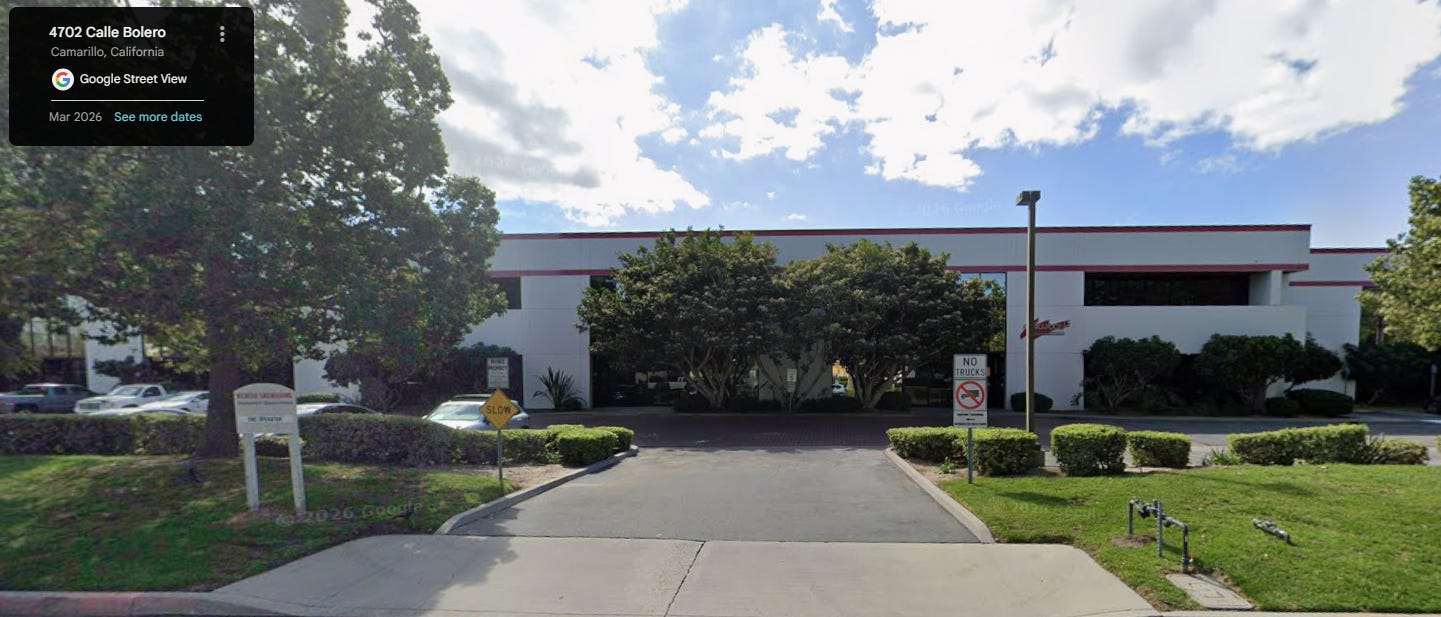
Emphasis mine. If you look at the Wilwood corporate headquarters above, and if you have any experience in manufacturing, your first thought might be: “I don’t see any way they’re forging anything in there.” The manufacture of forged aluminum billets/bars/whatever requires heavy-duty machinery, and you can see it in this video from a Chinese supplier. These are industrial-scale processes that I’m pretty sure cannot take place in a modern California office park. The environmental implications alone are major; during my time with Honda I would occasionally visit the Anna Engine Plant where the engine blocks were poured, and you could smell the metal before you took the freeway exit.
It seems obvious to me that Wilwood is doing a lot of machining on-site. Most likely they are taking forged blanks that are caliper-shaped, then making the calipers from them. Those caliper-shaped blanks should come from the United States, but it’s far, far, far easier to get them from China, because China hasn’t created an impenetrable forest of regulations to prevent basic industrial processes from happening. Wilwood is also a pretty small company, so they are less likely to be able to cut a deal with one of the major US suppliers like Alcoa or Bonnell. One under-reported way in which China undermines American business is that they will answer the phone for smaller accounts, because their labor and economic model allows them to do business with smaller accounts.
Make no mistake, Wilwood is a smaller account. They bought 31,179 kg of brake rotors from China in October. A 15-inch rotor weighs every bit of 14 or 15 kilograms; what you’re seeing here is just a thousand sets of brake rotors. One day’s worth of production at Honda Marysville. Not that there’s an American alternative for Wilwood anyway. It’s my understanding that no, zero, nada aftermarket-level brake rotor production is happening in the United States right now. That comes from a Centric employee, although the information is a couple of years old. I don’t believe that Wilwood claims to make brake rotors in the USA, only that they are finished here. (Which makes a big difference; brake rotor blanks are neither true nor balanced.)
Does Wilwood have the right to claim that their brakes are USA-made? Legally, I would guess that they do. The value of a forged caliper blank is probably three dollars a pound. The cheapest Wilwood calipers have a wholesale price on the order of $50-75 per caliper. Another way to look at it, if you’re a musician: no one seriously accused Paul Reed Smith of not making guitars in Maryland even though the catalog is chock full of “Brazilian rosewood” and “Honduras mahogany”. The law recognizes that when you turn $300 worth of wood into a $6,000 guitar you’ve essentially “made” it here.
The USA barely mines and extracts any aluminum. We are ahead of Saudi Arabia and behind Norway in the global rankings, mining one kilogram for every forty-seven kilograms mined in China. So it seems likely that even some “USA-made” aluminum raw stock was mined overseas.
Nine out of every ten dollars’ worth of value in a Wilwood caliper is probably generated in the United States. This is not the equivalent of the Hermes Birkin bag, which is a Chinese-made item that receives final finishing in Italy then sells for $40,000 against a total production cost of $1,400. It’s not even like a made-in-USA suit that uses Italian or English fabric. More like the 1950s-era Martin guitars that didn’t use any USA wood because it was still easy to get Brazilian rosewood and Alpine spruce.
So I’d suggest that Wilwood has the moral right to claim that their brake calipers are made in the USA. I’d prefer that they had a 100% American supply chain but that is letting the perfect be the enemy of the good. As soon as someone figures out how to work with a US aluminum raw provider to make fully USA calipers, I’ll immediately switch my preference over to them. For the record, Alcon also uses out-of-house blanks for their “made in UK” brakes. They don’t have a forge.
Truth be told, I don’t like Wilwood calipers and I have never driven a Wilwood-equipped car that particularly impressed me. Like it or not, the gold standard in cars is probably Brembo/AP, even though most of their production is slightly more Chinese in origin than the USA Math Olympics Team. I’ve also been tremendously impressed with the UK-made (from imported billet) HiSpec calipers fitted to my Radicals, although to be fair it’s not a difficult job to stop a Radical. Ironically, every source I can find suggests that the Nissin calipers on my ZX-14R, and the Sumitomo calipers on my LS430, were machined in Japan from Japanese billets. Japan no longer smelts aluminum from raw bauxite but they are doing nearly a million tons of recycling a year.
I’m glad for the readers who sent me this Wilwood “expose”. It’s not really a smoking gun but it does lead to some hard conversations about what “made in USA” really is, and what it should be. Keep talking to me about this stuff. It should be important to all of us.
GiroDisc. Made in the USA in Bellingham, WA.
As a bit of a brake geek, I've often wondered about Wilwood's claim that their products are USA-made. Perhaps I can follow up on this next week for you at SEMA when I visit their booth :).
Just last week when I was riding with a friend in our Elana Scherr-free Baja trip, he recounted a tale of a mutual friend of ours who used to be an engineer at Wilwood. Apparently some of the castings they received from China were undersized so our friend and others had to go down to the port (I presume Long Beach) and do a bunch of measurements of blanks in shipping containers. They found that the blanks were indeed undersized in whatever critical dimensions they checked and rejected the entire lot of material. Apparently the Chinese supplier didn't want the blanks back due to shipping costs. I hope someone at least got a few bucks at the aluminum recycling center out of the deal.