

Good afternoon, friends! Let’s jump right in.
Welcome back, Damon Hill
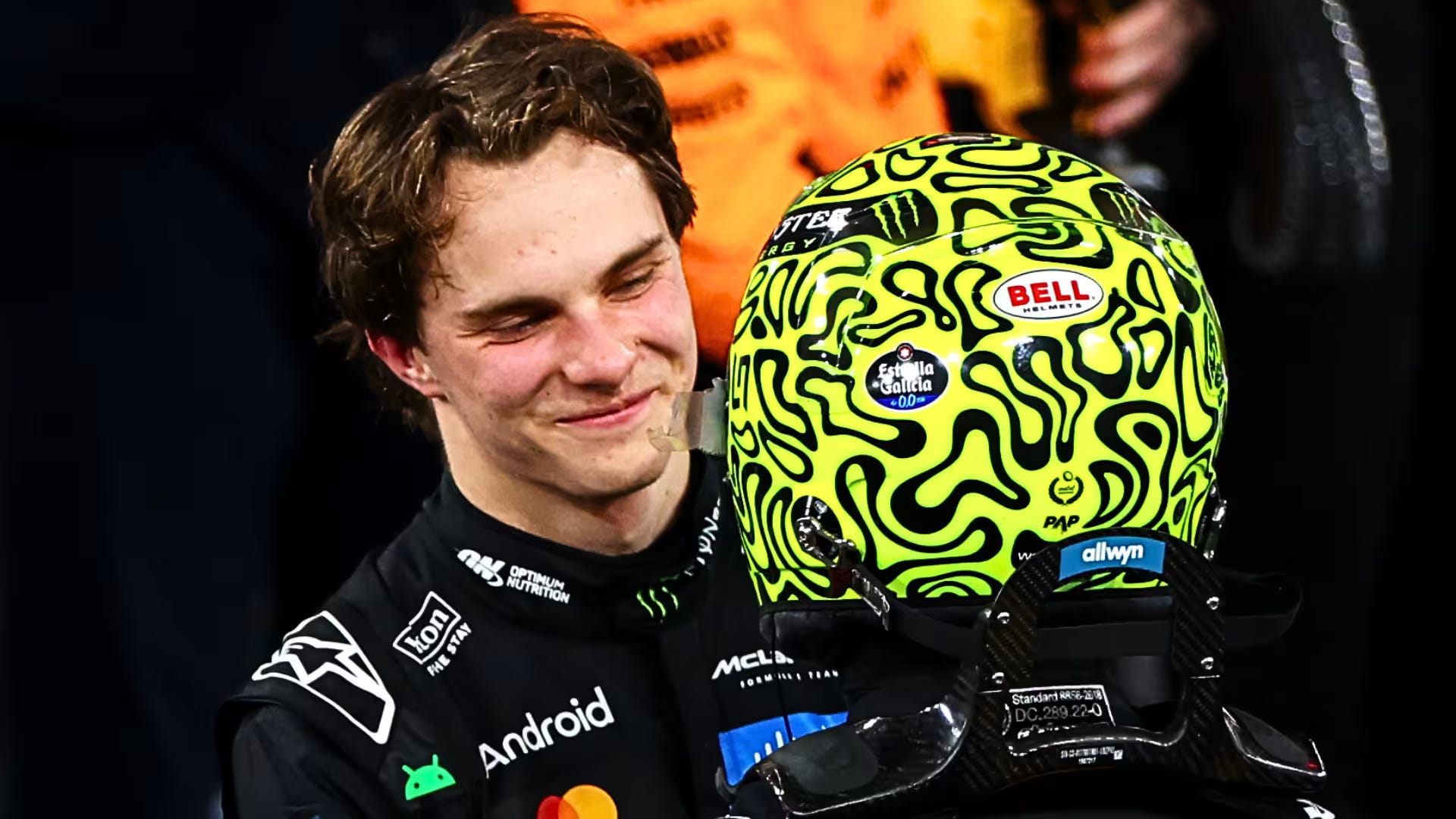
The F1 circus once again has what it enjoys most; a British WDC struggling mightily to win the championship in the best car. Sometimes his name is Damon Hill, sometimes it’s Lewis Hamilton… sometimes it’s Lando Norris. It should be easy to despise the man; he is a child of immense privilege with a father who is a lizard person and a mother who looks like an actual lizard. On track, he is softer than butter. Off track, he often appears to be on the verge of an emotional breakdown. Explicitly anointed by his team as the future World Champion, he was repeatedly bullied and “mogged” by his flat-affect Aussie teammate. The most you can say about the drive that earned him the WDC is that he did exactly the minimum. His move around Yuki Tsunoda, though ballsy enough, was so illegal that the FIA did everything but play “Rule Brittania” as they announced they’d take no disciplinary action regarding the incident.
And yet… he’s clearly a nice person who wishes no one ill. When he complains about something, it always comes with a truckload of self-criticism. He has precisely zero killer instinct, which is not what you want in a race driver but you probably do want in a neighbor or acquaintance. If he isn’t one of the top five drivers on the grid, he’s at least the least unpleasant driver on the grid.
So. Score one for the nice guy. If he had any sense, he’d retire tomorrow. More notes:
Yuki, go home. If you’d delayed Lando for Charles, you’d be a hero. If you’d crashed Lando, you’d be a villain with a lifetime job in the Red Bull organization. Instead, you were worse than useless. Stop breaking my heart, Yuki. Go win LeMans.
Discussion: How much of George Russell’s failure to compete was customer service?
Yet again, the supposedly incompetent Ferrari strategists put Lewis ten places up through tire and pitstop strategy while the commentators treated his passes of such luminaries like Stroll and Ocon like he was one more backmarker move away from the eighth championship. Charles Leclerc almost singlehandedly changed the WDC recipient while driving a 37hp diesel tractor, but by all means let’s focus on the statistically worst Ferrari driver of all time, shall we?
Adam Norris let the adrenochrome get the better of him after the race, gloating that “No one remembers who finished second” — but when F1 fans and historians talk about this season, expect the astounding performance of Max Verstappen to take up 75% of the space. I get tired of writing this every Wedsnesday, but he is objectively the best to ever do it and if you adjust for historical conditions he is absolutely the equal of, or superior to, the sport’s greatest names. While Norris sobbed in his radio, Max’s thoughts were immediately with his team: “Don’t be too disappointed. I definitely am not disappointed.” Yet Max knew in that moment what we all know: in a McLaren, he’s WDC with five races left to go.
It’s been a great second half of the season for Haas, hasn’t it? And once in a while Ocon really gets his act together.
It’s been a great season. Formula One, as an entertainment product, is worth the money, hype, and attention lavished on it. It’s the last true constructor’s series out there and yet it somehow is more competitive than spec series like NASCAR and Indycar.
If Drake really bet $20 million on Lando to win… well, that was a smart bet.
Meanwhile, in racing that isn’t quite
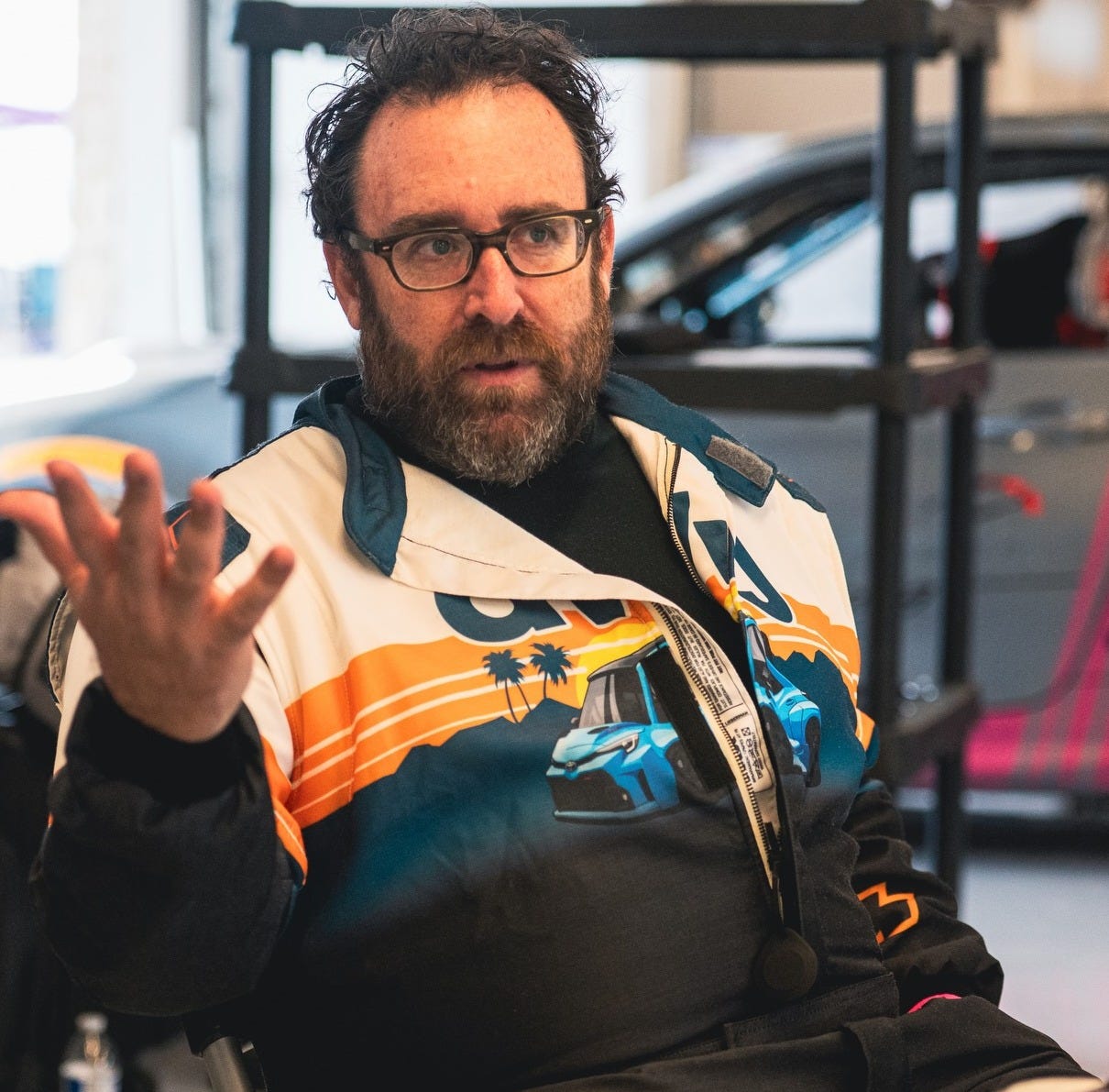
Friend of ACF Matt Farah won the GP1 class in WRL’s Sunday race at COTA, as the third driver in a team with Tommy Kendall and Mateo Siderman. This was a nice redemption for a difficult-to-the-point-of-embarrassing effort on Saturday, where they were the last car running in class. The difference was largely due to the team’s decision to keep Jonny Lieberman out of the car. I did some basic analysis of their stints on Saturday and discovered that Jonny was between 15 and 27 seconds per lap off pace. This exceeded even my most hateful, “50 Cent talks about Diddy” pre-race predictions of what would happen.
For context, Mini Danger Girl was about 5 seconds off the field in her first-ever Spec Racer Ford event, which happened five months after she learned how to drive a stick shift car and four months after she drove on track for the first time. (She did go on to finish second in the division and take two strong wins against respectable fields.) Also for context, in my first wheel to wheel race I was a full 1.1 seconds off the class record, which pissed me off so much I accused the team of sabotaging my tire pressures. (I am not proud of that. Sorry, Leo.) How Jonny has received twenty years’ worth of driver coaching and is still this awful is beyond me. I could train the average nursing home resident to run 15 seconds off the pace in a BMW specifically designed for jerkoffs and zero-talents to operate in “professional” competition. Give me three days on track, maximum. Also, Lieberman showed up to this goat-fuck performance in a full custom driver’s suit and helmet.
I had a very brief text conversation with Matt where he, in true Farah fashion, was highly complimentary of everyone from the WRL organizers to his teammate and friend Jonny. This is how you know he is a better person than I am, because if I had a teammate who shitcanned a $25,000 race for me like that I would drive to his mother’s house and slap her.
In a way, this episode perfectly sums up who my old colleague has become since leaving TTAC. Someone gave him a free race he didn’t deserve, in a car he wasn’t skilled enough to drive. Someone else apparently gave him a free custom suit and helmet, God only knows why. He was too arrogant to properly train or prepare for the event. He cost his team multiple positions through an utter and complete lack of competence. Then he posted about the event on social media like he’d just won the WDC.
At least Lieberman had the decency not to pose with the trophy… just kidding.
Speaking of where the suckers moon
I think it’s safe to say that there are a lot of legitimate criticisms to be made regarding Jim Farley’s tenure at Ford. The product has lost content and quality, while the strategic direction is uncertain. I’m also tired of hearing Farley puff up the Chinese EVs, which are generally not long-life items and in any event are astoundingly subsidized by their government.
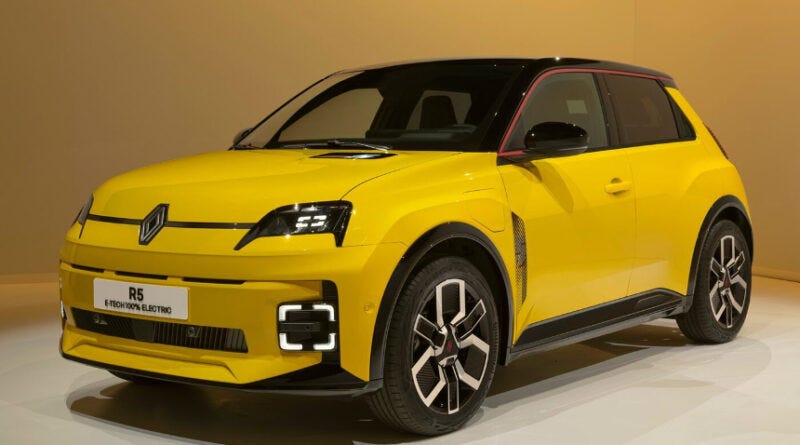
No matter how much you dislike Farley’s work up to this point, however, this latest move is pure genius. Ford will partner with Renault to build new small EVs for a 2028 release. Some friends of mine are dismayed at this — “You mean Ford has to be taught how to build a mass market car?” — but trust me on this: it is absolutely the right way to go.
Start by asking yourself: Why do people buy EVs? About eighty percent of the time, the honest answer is: “Because it’s mandatory, or close to mandatory, for them to choose one.” Imagine a world where governments and manufacturers hadn’t wasted dozens of billions of dollars on EV mandates and development. Some people would buy Teslas and Taycans because they like the tech or the social message. Others would buy microcars for their urban lives. And… that’s about it. The rest of the demand is entirely artificial.
By partnering with Renault, Ford avoids spending money on developing a product no one really wants, and they can turn off the tap in a hurry, just like Honda did with the Prologue. But that’s not even the smartest part of the deal. The French government is a major shareholder in Renault, to about the same extent that Nissan is. Renault is also a large part of France’s employment and social agenda. So the government is heavily incentivized to see Renault’s EV agenda succeed. That, in turn, affects how the European Union handles their EV mandates and incentives.
So Ford isn’t just palming off the showroom-paperweight business. They’re also ensuring that the thumb on the scale — and in Europe, there is always a thumb on the scale — stays on their side. If Germany succeeds in getting the EU to relax their mandatory implementation, then Ford doesn’t have too many resources involved in building dead inventory. If the EU chooses to create reality rather than adhere to it, then Ford has a friend on the inside.
Oh, did I mention the most fascinating part? Renault already has a partnership with Geely. So this deal allows Ford a look at Chinese EV development, if not an outright license to build or import their own Chinese EVs. It’s the Ford Courier all over again!
A tip of the ol’ fedora, therefore, to Mr. Farley. Now if he can just get the trucks to stop breaking…
And speaking of how the EU likes to operate
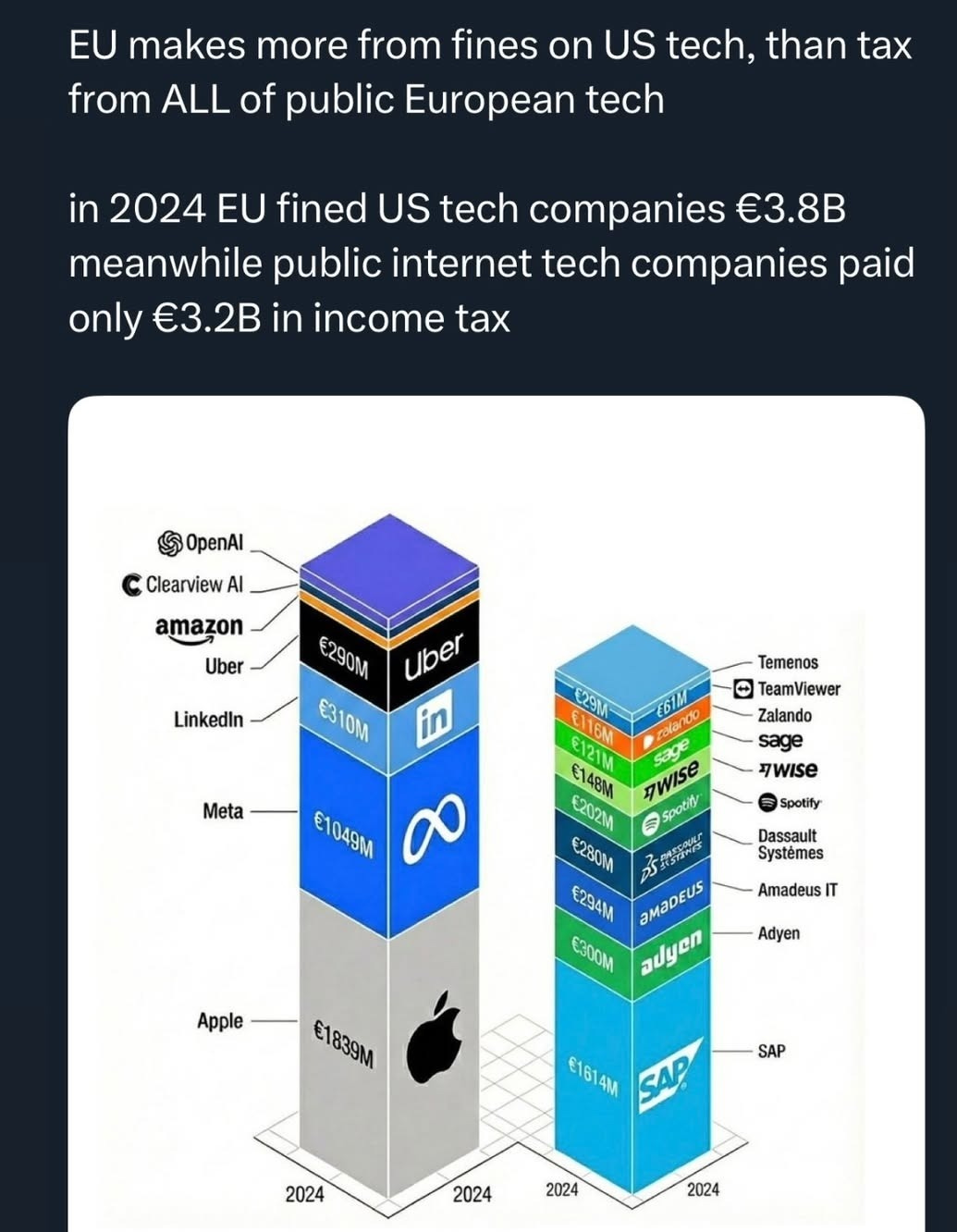
Full disclosure: I was either dimly aware or entirely unaware that TeamViewer, Sage, and Spotify were European companies.
The EU has been playing some odd free-speech games with American tech firms this year, signaling that they will reduce their aggressive content policing then turning around and fining Elon Musk $140 million for, basically, the crime of supporting a non-social-democrat political party. If you look at the above graph, however, it seems reasonable that the Brussels mandarins will continue to, ahem, discover wrongdoing by American tech firms. It just makes financial sense for them to do so. Don’t make the mistake of thinking that the European governments can just print money like the US can; they cannot. At some point, the numbers have to at least vaguely work.
The current arrangement seems perhaps secretly satisfactory to both sides. The tech firms get to do what they want, maybe not to “Waymo and Uber are killing cats and people” levels but certainly to a greater extent than they could otherwise. In exchange, the Europeans get to collect some revenue in a very nicely arbitrary fashion. Which in turn incentivizes each of the tech firms to curry favor with the Eurocrats, both as a whole and as regards individual politicians.
Let’s get some domestic context for these numbers. The United States might be a country where they will shoot your pregnant wife in the face when you cut a shotgun barrel a quarter-inch short at the direction of a federal informant, but it is also a country that encourages corporate tax evasion to an absurd degree. NVIDIA paid basically zero net tax between 2016 and 2022, for example. Apple paid a completely negligible amount of income tax for years; Trump gave them a one-time amnesty of sorts in his first term so they’d bring some income back. Since then, the amount of tax paid by Apple has increased every year and for 2024 it was almost $30 billion on about $94 billion of profit.
This, in turn, has angered their former tax haven of Ireland, so the EU recently ruled that Apple needed to pay Ireland $14 billion in, basically, back taxes. This dwarfs all the other tax-and-fine grift in the chart above, of course. You’ll be interested to know that the Apple payment accounted for twelve percent of all tax collected by Ireland.
By contrast, Apple’s tax payment in the USA was just 0.7 percent of American tax revenues. More context: only $530 billion of America’s $5T tax revenue is corporate. The rest is payroll and income taxation. Given that corporations account for just about ten percent of the tax revenue, you’d think they would get no more than about ten percent’s worth of say in how the country operates, right?
The most important thing to understand about all these numbers, in my opinion, is that they all represent the exercise of power. It’s certainly possible for the EU to implement an absolutely straighforward tech taxation policy. Hell, they don’t even have to go through the inconvenience of having the people, or even their elected officials, vote on it. The fact that no such policy exists tells a story — and that story is that the power to tax is the power to destroy, so the Eurocrats would prefer to keep that vague.
Now, as big as those EU and USA tax numbers are, there are even bigger numbers out there:

My friend “Sherman McCoy” was lecturing me the other day about how great Indian CEOs are for value creation. That appears to be true both in the sense of stock price and investment back into the home country. Amazon, which counts 6 India-born leaders among their senior 29, has announced $35B of additional investment there, on top of the $40B they’ve just put in. Under the direction of India-born Satya Nadella, Microsoft will be investing $17.5B. Finally, under the direction of India-born Sundar Pichai, Google will be investing $15B there.
That’s a whole Ford plus about half a Stellantis, all in off-hand commitments to the mother country announced with little fanfare. Apple has already put a fair amount of money into India, but right now they are tussling with the Indian government over some tax laws. Presumably those will be addressed, and the spice will then flow.
If you trawl through all these numbers long enough, like I did today, it’s hard not to see the situation like so:
The USA prints money that doesn’t and shouldn’t exist;
The tech corps siphon it off in a dozen ways from QE-based stock-price jumps to iPhones bought with public-assistance money;
They use that money to buy influence in Europe and build infrastructure in India and China.
I’m sure there’s more to it than that. But what is it?
We were racers once, and young
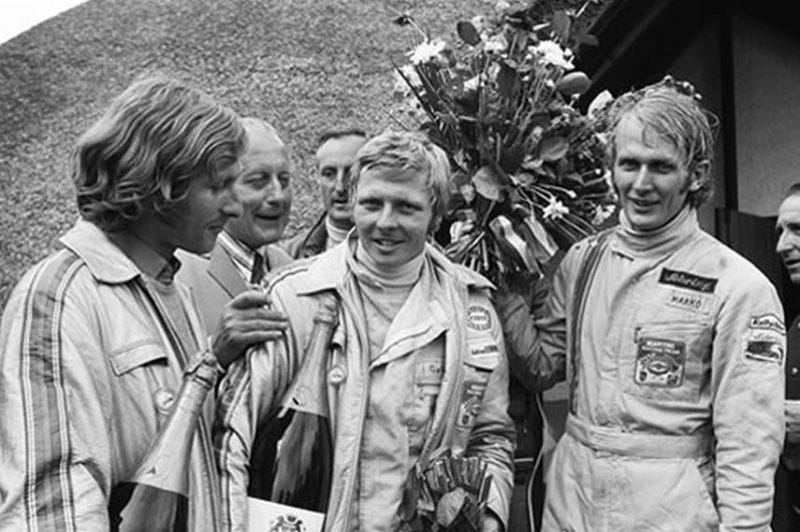
The announcement of Helmut Marko’s retirement has been greeted with unfettered joy by the Drive-to-Survive-educated racing Internet. Which makes sense. Most of them only know Marko from various caustic, unsentimental pronouncements he’s made about their favorite racing driver, mixed with a little bit of media speculation about his battle with Christian Horner to control Red Bull’s race program.
It should be noted that Marko was far more than that. He was the man who brought entire generations of talent into the F1 grid, including a flawed superstar in Sebastian Vettel and a perfect one in Max Verstappen. Before that, however, he was a racer with a tragic story of his own. He was a childhood friend and competitor of Jochen Rindt. He won LeMans in 1971, driving the fussy 917K. Driving an F1 car in 1972, he was struck in the eye by a stone thrown from the roadway. This blinded him for months, and he would eventually be forced to wear a glass eye in that socket.
As he aged, he worked harder to seek out young talent, eventually under the wing of a personal relationship with Red Bull’s founder. He chose Christian Horner and elevated him to team principal at an age when most men are barely a race engineer. He crushed any number of brilliant drivers beneath his wheels — Scott Speed being the one that probably rankles Americans the most, but he also broke the spirit of Sebastian Bourdais — but in doing so he found two world-class drivers. It’s easy to forget that Red Bull used to be Jaguar Racing, which was hopeless. Worse than hopeless. But now: Across just 21 Formula One seasons, Red Bull has obtained eight drivers’ championships.
That is Helmut Marko’s legacy. Frankly, it gives me a little hope. He was sixty years old when the Red Bull team kicked off. Imagine accomplishing everything he did after your sixtieth birthday! You can try explaining that to the average Jalop or DTS viewer. I doubt you will succeed.
A few notes on the Superformance S1
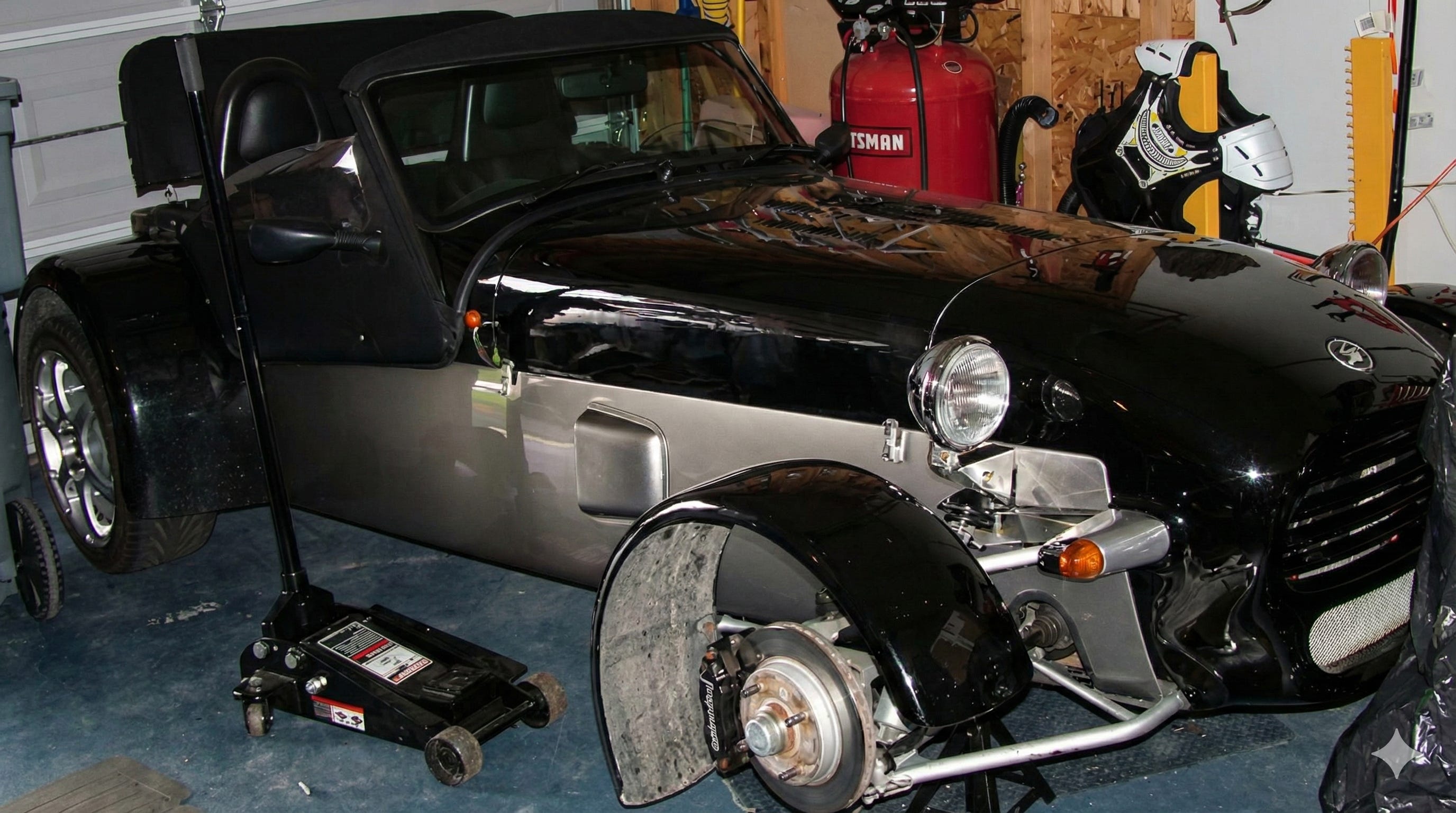
In yesterday’s Ginetta GTP8 review someone mentioned a Superformance S1 being sold on Bring-A-Trailer. I’ve repeatedly promised to tell the whole sordid story of that car in a single article, including, ya know, the fellow who died, and the drug needles, and the secret storage unit, and all that business.
For right now, however, I’d just like to reprint my first-ever appearance in the pages of Car and Driver, where I contributed this Letter To The Editors in response to a fawning review they did of the Noble M12:
The Noble M12 GTO-3R is an extremely exciting vehicle - I know I was impressed when I drove the prototype two years ago. That being said, I believe C/D readers should be aware of some of the downsides involved in owning a “component car”. I purchased a Superformance S1 (Superformance and Nobles are built together by Hi-Tech in South Africa) in 2002 from Mr. Rosen, and my experience was not exactly what the purchaser of a $77,000 sports car might expect.
I ordered a car that was billed as being “fast and nimble on the track.” I received a car that was overweight, underpowered (with a rear-wheel power rating about 20 percent below what was promised), and suffered from a list of maladies ranging from a leaky fuel tank to a recurring stalling problem, to say nothing of its lunatic willingness to shed interior and exterior parts without warning. By the time the frame broke - in Turn Two at Mosport during a driver-education day - my enthusiasm for dealing with the car and its dealers had long since vanished. I sold the car at a considerable loss to someone who was aware of the problem, and I counted myself lukcy to have escaped alive.
In the blush of my honeymoon with Mr. Rosen and his products, I had every expectation of being a Noble owner, but experiencing the day-to-day reality of “component car” ownership made that honeymoon shorter than that of Tyson and Givens. That’s why you can find me behind the wheel of a 911 nowadays.
Jack Baruth
Powell, Ohio
I’d also like to note an odd coincidence. We just got done discussing Jonny Lieberman’s last race — but his first race was with me, in the 2008 Lemons event held at Altamont in California, behind the wheel of Dave Schaible’s V8olvo.
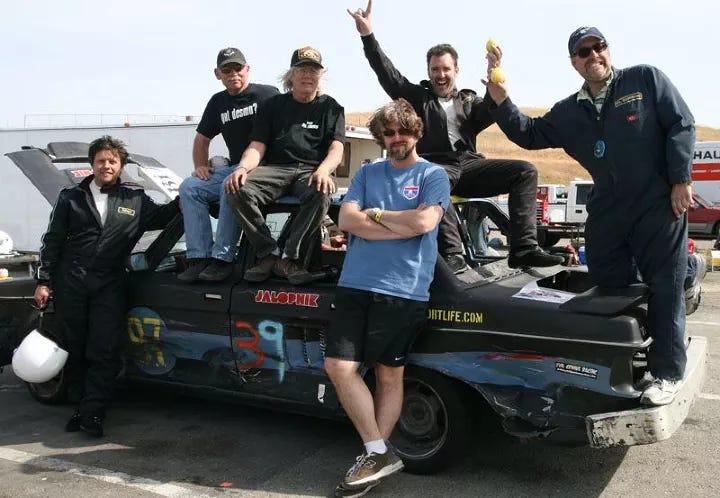
Jonny’s contributions were limited to a 30-minute stint that made him pretty tired because the power steering was broken. So then I had to pull a 3-hour stint to get us back in the top 15. (That was back before the enduro series started decreeing maximum stint length.) Not pictured in the above photo was John Pagel of “Evil Genius Racing”, who did the cage fab for us. He also drove the car, breaking the tie rod during his stint. I was pretty unpleasant about that, and I don’t feel good about it in retrospect.
Anyway, when I was writing about the broken frame weld on my Superformance I thought I’d look and see if anyone had ever encountered something similar. Turns out that someone had!
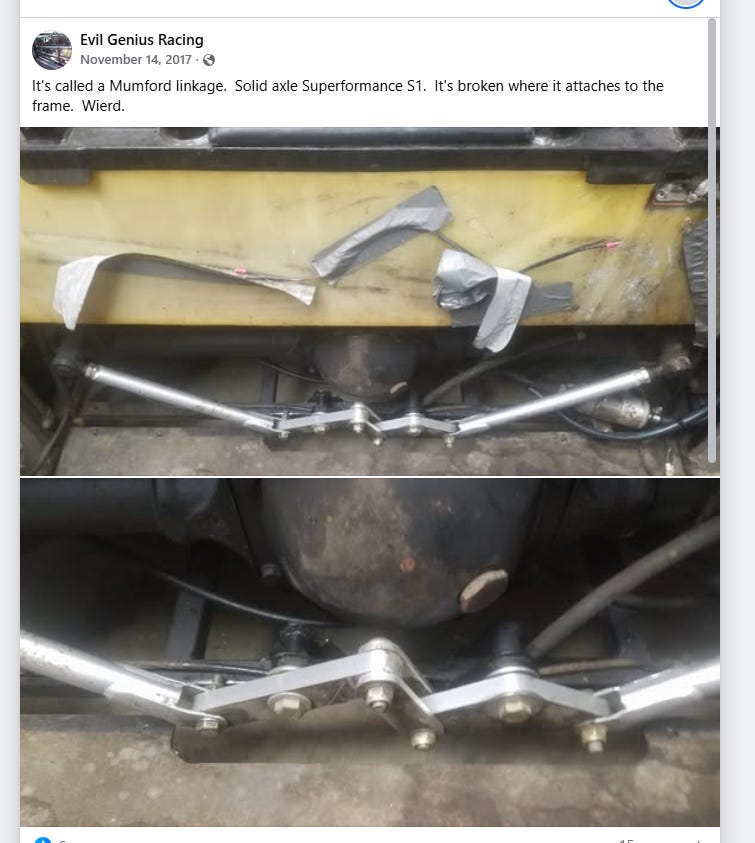
Now I don’t know how many of the 56 Superformances have had that failure, but what are the chances that two of the 5 drivers on our team would encounter it?
One more note on that race: The fellow who put the race team together was Phil Greden, known as “Murilee Martin” at the time. In his first-ever stint in his first-ever race, he exited the pitlane backwards and caused untold havoc. Jay Lamm, already a little frazzled from the death of a driver on Saturday afternoon, told Phil that he was banned from Lemons for life…. as a driver. But he wanted to stick around. And he created the entire judging infrastructure that charms, and infuriates, so many Lemons racers to this day. The end.
Why has Johnny been to so many training opportunities and still sucks?
Well, here in the gun world we have what we call ITI.
Impervious
To
Instruction
It doesn't matter how many different ways you try to teach the concepts, like En Vogue they're never gonna get it. (Careful with that joke, it's an antique!)
To quote a friend, there are some people who simply do not have their hands and their brain wired together. They do not pick up kinesthetic skill easily. You can say "Do X" and they will look you in the eye and earnestly tell you they're doing X while you can see as plain as the sun in the sky that they're so far from actually doing X you'd need the Hubble telescope for them to even SEE X.
In class this is the person who I lay hands on. In other words I will use my hands on theirs to show them how I'm applying pressure to the grip of the gun. I will use my trigger finger over top of theirs to model how I'm working through the trigger on a shot. I will use clear, purpose built visual aids to show them how I'm using the sights.
I don't think there's a good equivalent in driver's training. Even then, it's not always successful. It works a lot of the time but sometimes you get someone who is simply completely overwhelmed by what's going on. They get behind the gun and their limbic system is lit up like they just turned a corner and found themselves face to face with a 600 pound male lion. They can't process most of what you say. They don't realize most of what they're doing.
In each of us, there is a man, a monkey, and a lizard. (Understand this is an imperfect model of the human brain, but grossly accurate enough to serve the purposes of exegesis) The man is who we think of as the apex predator of the planet. It's the rational, reasoning, cunning part of us that makes us able to plan and use tools and think our way through a complex and dangerous problem. The monkey is the emotional center. It has some utility in an emergency...namely providing that urge to deal with things quickly. It screams at us that the plane is crashing but it is utterly unable to do anything to correct it.
In other words, you need the monkey to tell you the plane is going down. But once you're behind the controls you cannot let the monkey try to fly the plane because monkeys cannot fly planes. The kicker is that the monkey is going to be fighting as hard as it can to take over because it is selfish and afraid. It is unable to trust higher reasoning because it doesn't have higher reasoning.
The phrase "chimp out"...replaced more recently with crash out...has some significant truth built into it regarding the behavior being witnessed.
What you're often seeing with someone like Johnny is that he is unable to actually wrestle the monkey out of the pilots chair and hold him at bay. To quote my friend Ed Monk, you need the monkey to motivate your movement but then you need to be able to shut the monkey up. I'm betting Johnny can't do that.
"You're not a deliberate man, Ed. I do not sense that about you."
Johnny doesn't have a "predator" setting in high stress situations. He's the prey,*and he knows it.* The guys I know who have done the best in gunfights...including realizing they were in one after they've been shot in the face and taken 1/4 of a magazine's worth of ammo...have been able to flip the switch in their head to becoming the hunter. They became the predator, not the prey.
This means they spent their very limited resources in the moment focused on the task at hand, took active control of themselves and the situation and started making things happen. Not sitting back and letting things happen.
You can see it at work in police gunfight footage. There's a ton of it out there now from dashcams and lapel cams. Two good instances to look up are the Kyle Dinkheller incident and the Jared Reston incident.
If you watch the Dinkheller video you are going to see a desperately terrified human being armed with a pistol who mag dumps three full magazine at a threat from about 1 car length to 1.5 car lengths away without landing a single hit. The individual actually stands at his truck, loads cartridges into a magazine, loads the magazine into an M1 carbine and then proceeds to murder the deputy. The last thing you hear are his blood-curdling screams right before he is executed on the side of the road. All because he told an older man to take his hands out of his pockets.
That older man...a white dude...came from an honor culture. The insult of a younger man ordering him to take his hands out of his pockets caused an immediate loss of face and had to be remedied by killing the other party stone dead. He was unapologetic for his actions all the way to the executioner's chamber.
Contrast this with Jared Reston who was fighting a shoplifter during an off duty gig. His first clue he was in a gunfight was when he took a .45 ACP round through his lower jaw. He thought at first he'd been punched harder than ever before, and it wasn't until he regained the power of sight, felt his collapsed jaw on top of his tongue, and saw the perpetrator shooting that he realized he'd been shot and was still being shot. Whereupon he fought his way into a kneeling position, drew his gun, and killed the guy who shot him deader than fried chicken.
Dinkheller let the monkey fly the plane. Jared took control and killed the shit out of the other guy by employing marksmanship. "Every time I saw my front sight on his chest, I gave him another one." He didn't think mean thoughts. He didn't "mindset" the other guy to death. He employed unsexy, boring, but highly effective marksmanship principles to get the job done.
Johnny is not a deliberate man. I do not sense that about him.
If he encounters a monster he will die screaming because he is unable to stop the monkey from flying the plane. The amount of training that's been poured into him is irrelevant because when it comes right down to it, he lacks the discipline to take control of himself and the situation and do something useful. He's the guy you hear on videos of awful things happening saying "Oh my god!", not the guy you see in some of the videos taking useful action to help the situation. He's the guy screaming for someone to call 911, not the guy grabbing his med kit.
The delta between who he is and who he thinks he wants to be is vast.
"Off Topic" (as if there was such a thing), but:
With the stated inflation rate still a full percentage point above a supposed "target", which appears to be nothing more than an aspirational suggestion, the Fed decided to lower rates again today. The target is at least 1% above what should be the target, making the stated rate of inflation 2% higher than it ought to be and probably 5% above what is being stated. It's time to goose the economy to really get it going before midterms. I feel like Mr. Trump has lost the plot regarding Americans' deep dislike for higher prices, and is going to leave us with a Congress full of Warren/AOC-wannabes.
I walked by a meat case today in a supermarket where I was dropping off parts for one of my guys, and caught a $49/lb SIRLOIN (not ribeye) steak price out of the corner of my eye. This reminded me of when a sheet of OSB went from $7 to over $50 when we were experiencing "transitory 7% inflation". 'Tis but a flesh wound.
OTOH, China junk from Amazon continues to arrive at my door every day unabated at about the same price as it ever was pre-"devastating tariffs". Some China junk has even gone down. HF tools are pretty much the same price, as are Chinese electric motors and whatnot. It's only 100% domestically produced goods like OSB and beef that seem to be affected by "global market forces" and tariffs. I'm still buying $10 east-Asian hoodies from Mr. Bezos.
I'm sure there's a super-great and very fancy sounding reason for all of this, but I suspect it has to do with the fact that I just don't see "value creation" when I see it. The great news is my portfolio is up nicely. The bad news is I'll need every dime of it to keep up with all this "value created" inflation.
Carry on.